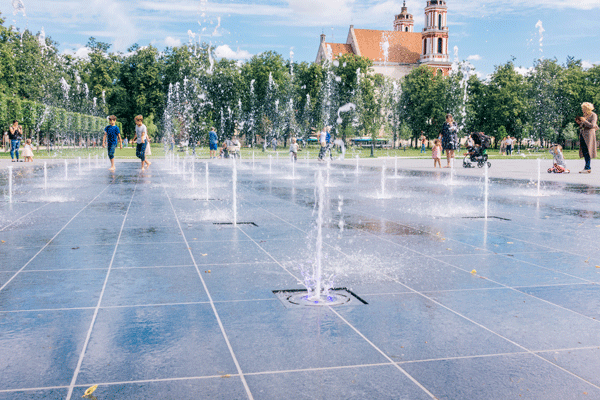
Homeschooling in Lithuania


Summary: If you're moving with kids to Lithuania and homeschooling is something you're considering, it's important to do your research and learn about homeschooling in Lithuania.
Homeschooling, a education alternative where children learn from home instead of attending traditional schools, is a growing trend worldwide. In Lithuania, this practice is also gaining traction, with both local and expat families opting for this educational route. However, the regulations and social landscape for homeschooling in Lithuania differ from other countries. This article aims to provide a comprehensive overview of homeschooling in Lithuania, focusing on its legality, prevalence, requirements, resources, and implications for university admissions, along with the pros and cons for expat families.
Is it Legal to Homeschool in Lithuania for Expat Families?
Homeschooling is legal in Lithuania, and this right extends to expat families residing in the country. According to Lithuanian law, parents have the freedom to choose the form of education for their children. However, the laws surrounding homeschooling are not as detailed as in some other countries, and interpretations can vary. It is recommended that expat families notify local educational authorities about their intention to homeschool, following the procedures outlined for local residents.
Is Homeschooling Common in Lithuania?
While homeschooling is gaining popularity in Lithuania, it is still not as common as in countries like the United States or the United Kingdom. The majority of Lithuanian children attend traditional schools. However, the homeschooling community is growing, driven by factors such as dissatisfaction with the traditional education system, special needs considerations, and the desire for a more personalized education.
What Specific Requirements Are There for Homeschoolers in Lithuania?
Lithuanian law requires that homeschooled children receive an education equivalent to that provided in public schools. Parents must submit an annual declaration to their municipality outlining their curriculum and teaching methods. Additionally, homeschooled students must participate in state examinations at the end of primary, basic, and secondary education levels. The curriculum should cover the Lithuanian language, mathematics, natural sciences, social sciences, and physical education.
Are There Groups or Resources for Families Who Homeschool in Lithuania?
There are several groups and resources available for families who homeschool in Lithuania. Online forums and social media groups connect homeschooling families, providing opportunities to share experiences, resources, and support. Additionally, some organizations offer educational materials, workshops, and events tailored to homeschoolers. Expat families can benefit from connecting with both local and international homeschooling communities.
What Should Homeschooling Parents Consider for University Admissions?
Homeschooling parents in Lithuania should be aware of university admission requirements both locally and internationally. In Lithuania, homeschooled students must pass state examinations to obtain a secondary education certificate, which is required for university admission. Internationally, homeschooled students may need to provide detailed records of their education, portfolios of work, and standardized test scores. Some universities may have specific policies for homeschooled applicants.
What Are the Pros and Cons of Homeschooling in Lithuania for Expat Families?
The pros of homeschooling in Lithuania for expat families include the ability to provide a personalized education tailored to the child's needs and pace, flexibility in scheduling, and the opportunity to incorporate cultural and language learning. Additionally, homeschooling can help expat children adjust to a new environment at their own pace. However, cons may include social isolation, the challenge of navigating Lithuanian educational regulations, and potential language barriers. Furthermore, expat families may face difficulties in finding local resources and support networks.
About the Author
 Joshua Wood, LPC joined Expat Exchange in 2000 and serves as one of its Co-Presidents. He is also one of the Founders of Digital Nomad Exchange. Prior to Expat Exchange, Joshua worked for NBC Cable (MSNBC and CNBC
Primetime). Joshua has a BA from Syracuse and a Master's in Clinical and Counseling Psychology from Fairleigh Dickinson University. Mr. Wood is also a licensed counselor and psychotherapist.
Joshua Wood, LPC joined Expat Exchange in 2000 and serves as one of its Co-Presidents. He is also one of the Founders of Digital Nomad Exchange. Prior to Expat Exchange, Joshua worked for NBC Cable (MSNBC and CNBC
Primetime). Joshua has a BA from Syracuse and a Master's in Clinical and Counseling Psychology from Fairleigh Dickinson University. Mr. Wood is also a licensed counselor and psychotherapist.
Some of Joshua's articles include Pros and Cons of Living in Portugal, 10 Best Places to Live in Ireland and Pros and Cons of Living in Uruguay. Connect with Joshua on LinkedIn.
Additional Information:
- Lithuania Guide
- Healthcare & Health Insurance in Lithuania
- Members Talk about Healthcare & Health Insurance in Lithuania
- Best Places to Live in Lithuania
- Real Estate in Lithuania
- Guide to Real Estate in Lithuania
- Pros & Cons of Living in Lithuania
- Cost of Living in Lithuania
- Do I need Health Insurance When Moving to Lithuania?
- Having a Baby in Lithuania
- Health Insurance in Lithuania
- Best Places to Visit in Lithuania for Christmas Cheer
- Pros and Cons of Living in Lithuania 2026