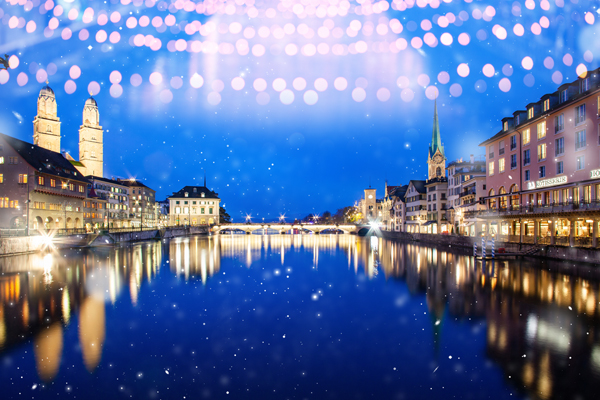
Zurich
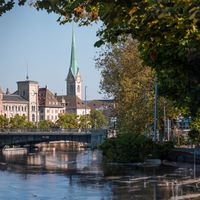
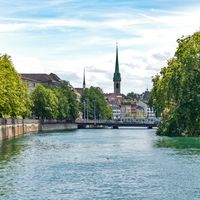
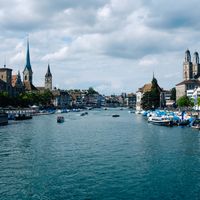
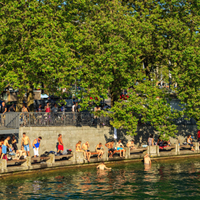
Urban RiverfrontZurich draws young professionals, families, and established executives seeking stability in one of Europe's most efficient cities. They come for the jobs—banking, tech, pharmaceuticals—and stay for the quality of life. Situated on the northern shore of Lake Zurich, the city blends medieval Old Town alleyways with sleek glass towers and world-class museums. The Altstadt's narrow streets wind past guild houses and Renaissance facades, while the lakefront promenade offers breathing room and water views. Zurich functions as Switzerland's financial hub, but it's far from a sterile office park: independent galleries, Michelin-starred restaurants, and a thriving music scene occupy the same blocks as corporate headquarters. The city's public transit system is so reliable that car ownership feels optional. Forests and hiking trails begin at the city limits, and the Alps are visible on clear days. English speakers integrate easily, though learning Swiss German opens doors. The pace is orderly without feeling stifling—people work hard and play deliberately.
 SJB Global
Connect
SJB-Global is a top-rated financial advisory firm specializing in expat financial advice worldwide, offering retirement planning & tax-efficient solutions with a regressive fee model. Our clients benefit from their country’s most favorable tax environment by utilizing the efficient investment vehicles we offer. Our commitment to quality service is reflected in our stellar reviews, with over 300 testimonials boasting 95% five-star ratings.
Click connect to have our partner contact you via e-mail and/or phone.
SJB GlobalSJB-Global is a top-rated financial advisory firm specializing in expat financial advice worldwide, offering retirement planning & tax-efficient solutions with a regressive fee model. Our clients benefit from their country’s most favorable tax environment by utilizing the efficient investment vehicles we offer. Our commitment to quality service is reflected in our stellar reviews, with over 300 testimonials boasting 95% five-star ratings.
Connect
Click connect to have our partner contact you via e-mail and/or phone.
Visa & Residency
Obtaining a residency in Switzerland involves a structured process that can vary depending on the applicant's nationality, reasons for immigration, and the canton in which they intend to reside. The most common types of residency permits are the L Permit (short-term residence permit) and the B Permit (initial or temporary residence permit). The L Permit is suitable for expatriates planning to stay in Switzerland for up to one year. It is often granted to those with a fixed-term employment contract. The B Permit is for those intending to stay longer than a year and is usually tied to an indefinite employment contract or family reunification. Both permits require a valid employment contract or proof of financial means to support oneself. The process typically starts with securing a job or demonstrating the financial means to live in Switzerland. The employer or the individual must then apply to the cantonal migration office for the appropriate permit. This involves submitting various documents, including a valid passport, proof of address, employment contract, and sometimes a health insurance policy and a clean criminal record. For non-EU/EFTA nationals, the process can be more challenging due to stricter regulations and quotas. They must often secure a job with a Swiss employer who can prove that the position could not be filled by a local or EU/EFTA citizen. Once the application is submitted, the cantonal authorities review it, which can take several weeks or months. If approved, the applicant will receive a residence permit, allowing them to live and work in Switzerland. The permit also dictates the holder's rights regarding travel, change of employment, and family reunification. The difficulty of the process can vary. EU/EFTA citizens generally find it easier due to bilateral agreements that facilitate the movement of people, while non-EU/EFTA citizens may face a more complex process. It is essential to understand the specific requirements of the canton where one plans to reside, as regulations can differ across the country.

Cost of Living
Zurich consistently ranks among the world's most expensive cities. Rent for a one-bedroom apartment in the city center runs into four figures monthly; groceries, dining, and childcare all command premium prices. Salaries are correspondingly high, which is why the city attracts international talent willing to accept the trade-off. If you're relocating on a modest budget, Zurich will strain finances; if your employer is Swiss-based or you're self-employed at international rates, the costs become manageable.
Weather
Zurich experiences a temperate continental climate with cold, snowy winters (December to February) and mild summers (June to August), with frequent cloud cover and moderate rainfall throughout the year.
Healthcare in Zurich
University Hospital Zurich (USZ) and Triemli Hospital provide tertiary and secondary care respectively, both with English-speaking staff and modern equipment. Private clinics like Hirslanden and Medbase offer rapid access for non-emergency care; wait times for specialists typically run 2-4 weeks through public insurance.
Schools in Zurich
Zurich has several established international schools including the International School of Zurich (ISZ), which offers the International Baccalaureate curriculum, and the Zurich International School, serving ages 3-18 with IB programs. These schools draw expat families and provide instruction primarily in English alongside Swiss German integration.
Bilingual education is widely available through both public and private institutions, with many schools offering German-English or German-French instruction. The Swiss education system naturally incorporates multiple languages, and numerous private schools explicitly structure bilingual curricula to support multilingual development.
Restaurants in Zurich
Living in Zurich
Best Places to Live in Zurich
Moving to Zurich
Healthcare in Zurich