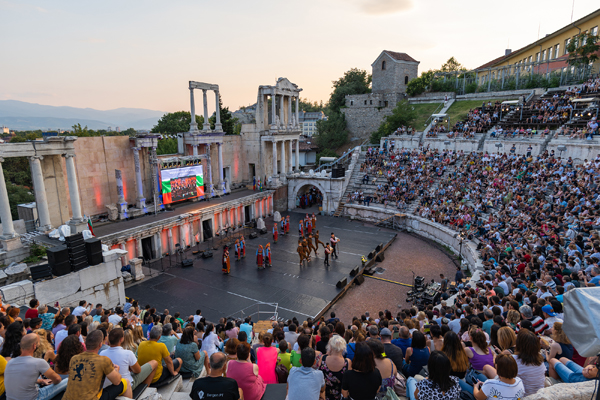
Christmas in Bulgaria


Summary: Learn how people celebrate Christmas and the New Year in Bulgaria - traditions, food, church, gift exchange and more.
The holiday season in Bulgaria brings a mix of deep tradition, cozy gatherings, and festive cheer. For expats and digital nomads experiencing their first Christmas and New Year here, the celebrations offer a blend of familiar customs and unique local flavors. From twinkling lights to hearty meals, the season is rich with rituals that reflect Bulgaria’s cultural heritage.
Holiday Traditions and Celebrations
Christmas and New Year in Bulgaria are steeped in Orthodox Christian traditions, though many modern celebrations also embrace secular festivities. The season officially kicks off on December 24th, Christmas Eve, which is often more significant than Christmas Day itself. Families gather for a meatless feast, symbolizing the end of the Nativity Fast, while New Year’s Eve is marked by lively parties, fireworks, and toasting to the year ahead.
One of the most distinctive Bulgarian holiday customs is the *koledari*—groups of young men who go caroling door-to-door on Christmas Eve, singing traditional songs and blessing households for good health and prosperity. In return, they’re offered food, drinks, or small gifts. Another unique tradition is the *survakane*, where children lightly tap adults with decorated cornel branches on New Year’s Day, reciting rhymes for luck and receiving coins or treats in return.
Santa Claus and Gift-Giving
Bulgaria’s gift-bringer is *Dyado Koleda* (Grandfather Christmas), a figure similar to Santa Claus but with a more traditional Slavic appearance—often depicted in a long coat and fur hat. Unlike in Western cultures, gifts are typically exchanged on New Year’s Eve rather than Christmas Day. Children leave their shoes by the fireplace or under the tree, hoping to find them filled with small presents, sweets, or coins by morning.
Adults also exchange gifts, though the focus is more on thoughtfulness than extravagance. Common presents include homemade treats, wine, books, or handcrafted items. For those invited to a Bulgarian home during the holidays, bringing a bottle of good wine, chocolates, or a box of *kurabii* (butter cookies) is always appreciated.
Festive Foods and Desserts
Food is at the heart of Bulgarian holiday celebrations, with each meal carrying symbolic meaning. Christmas Eve features a meatless dinner with an odd number of dishes (usually seven, nine, or twelve), representing prosperity. Staples include *sarmi* (cabbage or vine leaves stuffed with rice), *bob chorba* (bean soup), *tikvenik* (pumpkin-filled pastry), and *baklava* or *garash cake* for dessert.
Christmas Day and New Year’s meals are heartier, with roasted pork, lamb, or chicken taking center stage. *Banitsa*, a flaky pastry filled with cheese, is a must-have, often baked with lucky charms inside—whoever finds the coin in their slice is said to have good fortune in the coming year. For dessert, *kozunak* (a sweet, braided bread) and *meze* (a mix of cured meats, cheeses, and pickles) are common.
Christmas Eve and Christmas Day
Christmas Eve is a family-centric affair, with a quiet, reflective dinner followed by games, storytelling, or listening to carols. Many Bulgarians attend midnight Mass at Orthodox churches, where the *koledari* often perform their songs. Christmas Day is more relaxed, with visits to extended family, leisurely meals, and time spent at home.
New Year’s Eve, on the other hand, is a time for celebration. Cities like Sofia, Plovdiv, and Varna host public concerts, fireworks displays, and street parties. Many Bulgarians also gather at home for a late-night feast, toasting with *rakia* (fruit brandy) or champagne as the clock strikes midnight.
Where to Experience the Best Festivities
For those looking to soak in the holiday spirit, several towns and neighborhoods stand out. Sofia’s *Vitosha Boulevard* and *Slaveykov Square* are beautifully decorated with lights and holiday markets, while Plovdiv’s *Kapana District* offers a bohemian twist with festive workshops and live music. Veliko Tarnovo, with its medieval charm, hosts a magical Christmas market in the old town, complete with crafts, mulled wine, and carolers.
In smaller villages, traditions are even more pronounced. Try visiting *Bansko* for its cozy, snow-covered streets and folk performances, or *Koprivshtitsa* for a quieter, old-world Christmas experience. For a truly local touch, seek out a *koledari* performance or a *survakane* ritual—these are the moments that make Bulgaria’s holiday season unforgettable.
About the Author
 Joshua Wood, LPC joined Expat Exchange in 2000 and serves as one of its Co-Presidents. He is also one of the Founders of Digital Nomad Exchange. Prior to Expat Exchange, Joshua worked for NBC Cable (MSNBC and CNBC
Primetime). Joshua has a BA from Syracuse and a Master's in Clinical and Counseling Psychology from Fairleigh Dickinson University. Mr. Wood is also a licensed counselor and psychotherapist.
Joshua Wood, LPC joined Expat Exchange in 2000 and serves as one of its Co-Presidents. He is also one of the Founders of Digital Nomad Exchange. Prior to Expat Exchange, Joshua worked for NBC Cable (MSNBC and CNBC
Primetime). Joshua has a BA from Syracuse and a Master's in Clinical and Counseling Psychology from Fairleigh Dickinson University. Mr. Wood is also a licensed counselor and psychotherapist.
Some of Joshua's articles include Pros and Cons of Living in Portugal, 10 Best Places to Live in Ireland and Pros and Cons of Living in Uruguay. Connect with Joshua on LinkedIn.
Additional Information:
- Bulgaria Guide
- Healthcare & Health Insurance in Bulgaria
- Members Talk about Healthcare & Health Insurance in Bulgaria
- Best Places to Live in Bulgaria
- Real Estate in Bulgaria
- Guide to Real Estate in Bulgaria
- Pros & Cons of Living in Bulgaria
- Cost of Living in Bulgaria
- Educational System in Bulgaria
- 10 Things to Know Before Moving to Bulgaria
- How to Buy a Home in Bulgaria
- Pros and Cons of Living in Bulgaria
- 2026 Guide to Living in Bulgaria
- Pros and Cons of Living in Bulgaria 2026
- 2026 Guide to Moving to Bulgaria