

Christmas in Estonia


Summary: Explore the festive traditions of Christmas and New Year in Estonia, where the celebrations are marked by special foods, church ceremonies, the exchange of gifts, and an array of cultural customs.
The holiday season in Estonia is a magical time, blending deep-rooted traditions with a cozy, wintery charm. For expats and digital nomads experiencing their first Christmas and New Year’s in the country, the celebrations offer a mix of familiar customs and unique local flavors. From twinkling lights to hearty feasts, Estonia’s festive spirit is both warm and enchanting.
Holiday Traditions and Celebrations
Christmas, or *Jõulud*, is one of the most important holidays in Estonia, deeply tied to folklore, nature, and family. The celebrations begin in early December, with Advent calendars, candlelight, and the lighting of the first Advent candle. Many Estonians observe *Jõululaupäev* (Christmas Eve) as the main day of celebration, rather than Christmas Day itself.
New Year’s Eve, or *Vana-aasta õhtu*, is a lively affair, marked by fireworks, parties, and a sense of renewal. Unlike the quiet, family-focused Christmas, New Year’s is often celebrated with friends, concerts, and public events.
Santa Claus and Gift-Giving
Estonia’s version of Santa Claus is *Jõuluvana* (Old Man Christmas), who visits homes on Christmas Eve to deliver gifts. Unlike in some Western traditions, Jõuluvana is often accompanied by *Käo*, a mischievous helper who plays pranks or asks riddles before the presents are handed out. Children leave out socks or shoes for small gifts, and families exchange presents under the tree.
Gifts tend to be thoughtful but not extravagant—handmade items, books, sweets, and practical gifts are common. Many Estonians also donate to charity during the holidays, reflecting the season’s spirit of giving.
Traditional Foods and Desserts
Christmas meals in Estonia are hearty and festive, featuring dishes like *verivorst* (blood sausage), *mulgikapsad* (sauerkraut with pork), and *sült* (jellied meat). For dessert, *piparkoogid* (spiced gingerbread cookies) and *jõulukook* (Christmas cake) are staples. A traditional drink is *hõõgvein* (mulled wine), often enjoyed at Christmas markets.
New Year’s Eve meals are lighter but still indulgent, with dishes like *rosolje* (beetroot salad) and *seljanka* (a rich meat soup). Champagne and sparkling wine are popular for toasting at midnight.
Christmas Eve and Christmas Day
Christmas Eve is the centerpiece of Estonian celebrations. Many families attend a *jõulujumalateenistus* (Christmas church service) in the evening, often held at midnight. Afterward, they gather for a festive meal, exchange gifts, and sing carols. Some visit cemeteries to light candles for loved ones, a poignant tradition that adds to the holiday’s emotional depth.
Christmas Day is quieter, spent with family, often enjoying leftovers and relaxing. Many businesses close, and the streets are peaceful, with only the sound of church bells breaking the silence.
Church and Religious Observances
While Estonia is one of the least religious countries in Europe, Christmas still holds spiritual significance for many. Churches across the country hold special services, with midnight Mass on Christmas Eve being the most popular. Even those who don’t regularly attend church may visit for the occasion, drawn by the beauty of the candlelit services and the sense of community.
Best Places for Festive Decorations and Markets
Tallinn’s Old Town is the heart of Estonia’s holiday magic, with its cobblestone streets transformed into a winter wonderland. The *Tallinn Christmas Market* at Town Hall Square is one of the most famous in Europe, offering handmade crafts, mulled wine, and festive treats. The market’s towering Christmas tree, a tradition since the 15th century, is a must-see.
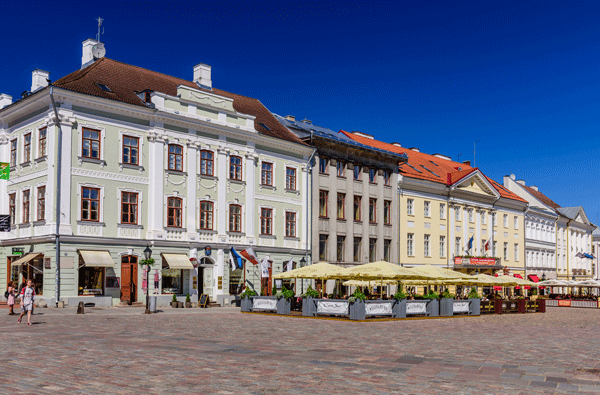
Other notable spots include Tartu’s Christmas market, which has a cozy, small-town feel, and Pärnu’s seaside festivities, where ice skating and holiday lights create a picturesque setting. Smaller towns like Viljandi and Rakvere also host charming markets with local crafts and performances.
For those who love lights, the *Tallinn Song Festival Grounds* and *Kadriorg Park* are beautifully decorated, while the *Telliskivi Creative City* offers a more modern, artsy take on holiday cheer. No matter where you go, Estonia’s festive spirit shines brightest in its cities and towns during the holiday season.
About the Author
 Joshua Wood, LPC joined Expat Exchange in 2000 and serves as one of its Co-Presidents. He is also one of the Founders of Digital Nomad Exchange. Prior to Expat Exchange, Joshua worked for NBC Cable (MSNBC and CNBC
Primetime). Joshua has a BA from Syracuse and a Master's in Clinical and Counseling Psychology from Fairleigh Dickinson University. Mr. Wood is also a licensed counselor and psychotherapist.
Joshua Wood, LPC joined Expat Exchange in 2000 and serves as one of its Co-Presidents. He is also one of the Founders of Digital Nomad Exchange. Prior to Expat Exchange, Joshua worked for NBC Cable (MSNBC and CNBC
Primetime). Joshua has a BA from Syracuse and a Master's in Clinical and Counseling Psychology from Fairleigh Dickinson University. Mr. Wood is also a licensed counselor and psychotherapist.
Some of Joshua's articles include Pros and Cons of Living in Portugal, 10 Best Places to Live in Ireland and Pros and Cons of Living in Uruguay. Connect with Joshua on LinkedIn.
Additional Information:
- Estonia Guide
- Healthcare & Health Insurance in Estonia
- Members Talk about Healthcare & Health Insurance in Estonia
- Best Places to Live in Estonia
- Real Estate in Estonia
- Guide to Real Estate in Estonia
- Pros & Cons of Living in Estonia
- Cost of Living in Estonia
- 10 Tips for Living in Estonia
- Healthcare in Estonia
- 2026 Guide to Living in Estonia
- Pros and Cons of Living in Estonia 2026