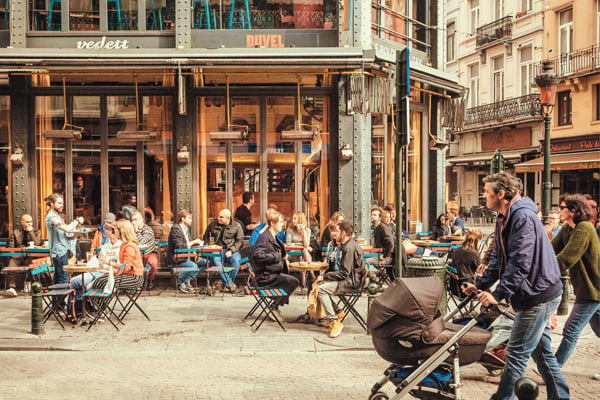
Understanding the Health System in Belgium


Summary: Familiarize yourself with the health system in Belgium. Understand its usage options and constraints for those who choose to move to and reside there, including expats, digital nomads, and retirees.
Buying a home in Belgium as an expat can be an exciting process, but it's also complex and filled with unique challenges. This guide will walk you through the essential aspects of purchasing property in Belgium, from finding the right home to understanding the legal requirements and potential pitfalls.
How do I find houses for sale in Belgium?
To find houses for sale in Belgium, you can start by exploring online property portals such as Vlan Immo, Zimmo, and Immoweb. These platforms offer a wide range of listings and allow you to filter based on your preferences. Additionally, you can work with local real estate agencies or use the services of a property finder, who will search for suitable properties on your behalf for a fee.
Are there restrictions on foreigners owning property in Belgium?
Belgium generally has an open policy towards foreign property ownership, with no significant restrictions on EU/EEA citizens. Non-EU/EEA citizens may face some limitations, particularly regarding the purchase of second homes in certain regions, like the Brussels-Capital Region. However, these restrictions can often be circumvented by demonstrating a genuine connection to the country, such as residency, work, or family ties. It's essential to consult with a legal professional for advice tailored to your situation.
Does Belgium have an MLS type system?
Belgium does not have a centralized Multiple Listing Service (MLS) system like the one found in the United States. Instead, properties are listed through various online platforms, real estate agencies, and notaries. This means that buyers need to consult multiple sources to get a comprehensive overview of available properties.
Do brokers have licenses and how do I know if they are licensed?
Real estate agents in Belgium are required to hold a professional license issued by the Belgian Institute of Real Estate Professionals (IPI/BIV). To verify if an agent is licensed, you can check the IPI/BIV's online registry or ask the agent to provide their license number. Working with a licensed broker ensures that you are dealing with a professional who adheres to specific ethical and legal standards.
What documents are required when buying a home?
When buying a home in Belgium, you will need to provide several documents, including a valid ID or passport, proof of address, and proof of income or financial stability. Additionally, you will need to obtain a compromise agreement (compromis de vente/koopcompromis), which outlines the terms of the sale, and a deed of sale (acte de vente/akte van verkoop), drafted by a notary. Other documents may include property surveys, energy performance certificates, and insurance policies.
Do I need a lawyer when buying a home in Belgium?
While it is not legally required to hire a lawyer when buying a home in Belgium, it is highly recommended, especially for expats. A lawyer can assist with legal translations, review contracts, and ensure your interests are protected throughout the process. Legal fees typically range from 1% to 3% of the property's value, depending on the complexity of the transaction.
Do people typically buy a property with all cash or take out a mortgage?
In Belgium, both cash purchases and mortgages are common. However, many buyers opt for a mortgage, with loan-to-value ratios often ranging from 70% to 90%. Mortgages are typically available for terms of up to 25 years, with fixed or variable interest rates. It's essential to compare offers from different banks to find the most suitable mortgage for your needs.
Are there inspections that take place, and if so what is that process like?
While not legally mandatory, property inspections are recommended to assess the condition of the home before purchase. Inspections can be arranged through independent surveyors or specialized companies. The process involves a thorough examination of the property's structure, electrical systems, plumbing, and other aspects. The inspector will provide a detailed report outlining any issues or required repairs, which can be used to negotiate the price or request fixes.
What are some of the pitfalls to avoid when buying property in Belgium?
Some pitfalls to avoid when buying property in Belgium include not understanding the local language and laws, skipping property inspections, and failing to research the neighborhood and property market trends. Additionally, be cautious of hidden costs, such as registration fees, notary fees, and taxes, which can add up to around 10% to 15% of the property's value. Always consult with professionals, such as lawyers and real estate agents, to ensure a smooth and informed buying process.
Insider Tips from Expats in Belgium: How to Navigate the Health System
"Belgium offers a wide range of healthcare services, including primary care, specialist care, hospital care, and mental health services. The public healthcare system in Belgium is funded by the government and is generally of high quality. Foreign residents are eligible to use the public healthcare system, although they may need to pay a fee for certain services. Expats in Belgium can use the public healthcare system by registering with their local commune and obtaining a Belgian health insurance card. This card allows them to access the same healthcare services as Belgian citizens, including free or discounted care," commented one member living in Belgium.
"Emergency services in Belgium are generally reliable and efficient. In the event of an emergency, the best way to call for an ambulance is to dial 112, which is the emergency number for all of Belgium. This number is free of charge and can be dialed from any phone, including mobile phones. The operator will then connect you to the appropriate emergency service, such as an ambulance, fire department, or police," commented one member living in Belgium.
About the Author
 Betsy Burlingame is the Founder and President of Expat Exchange and is one of the Founders of Digital Nomad Exchange. She launched Expat Exchange in 1997 as her Master's thesis project at NYU. Prior to Expat Exchange, Betsy worked at AT&T in International
and Mass Market Marketing. She graduated from Ohio Wesleyan University
with a BA in International Business and German.
Betsy Burlingame is the Founder and President of Expat Exchange and is one of the Founders of Digital Nomad Exchange. She launched Expat Exchange in 1997 as her Master's thesis project at NYU. Prior to Expat Exchange, Betsy worked at AT&T in International
and Mass Market Marketing. She graduated from Ohio Wesleyan University
with a BA in International Business and German.
Some of Betsy's articles include 12 Best Places to Live in Portugal, 7 Best Places to Live in Panama and 12 Things to Know Before Moving to the Dominican Republic. Betsy loves to travel and spend time with her family. Connect with Betsy on LinkedIn.
Additional Information:
- Belgium Guide
- Healthcare & Health Insurance in Belgium
- Members Talk about Healthcare & Health Insurance in Belgium
- Best Places to Live in Belgium
- Real Estate in Belgium
- Guide to Real Estate in Belgium
- Pros & Cons of Living in Belgium
- Cost of Living in Belgium
- Culture Shock in Belgium
- Homeschooling in Belgium
- How to Enroll Your Children in School in Belgium
- Educational System in Belgium
- 2026 Guide to Living in Belgium
- Pros and Cons of Living in Belgium 2026
- 2026 Guide to Moving to Belgium