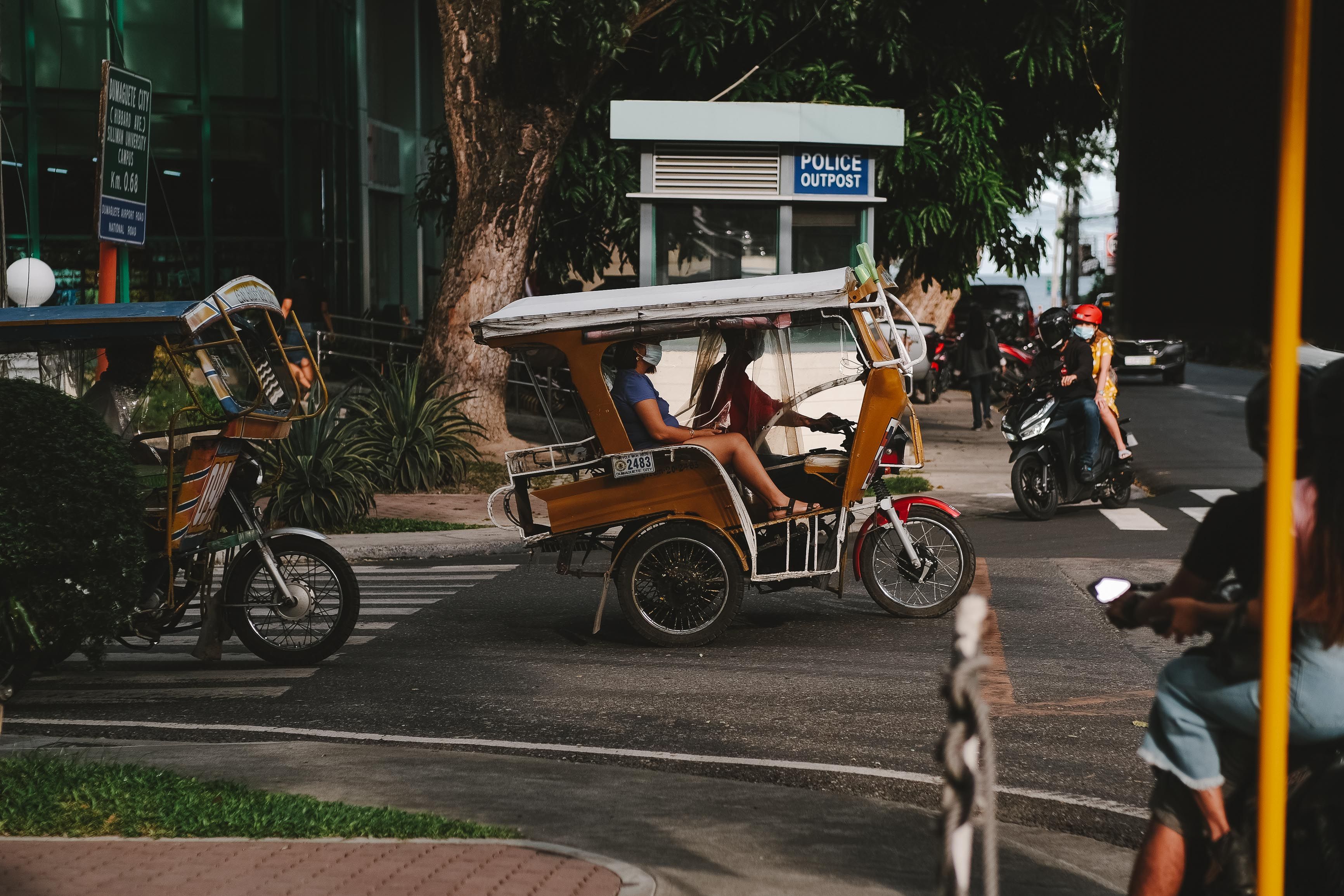
Culture Shock in Philippines


Summary: If you're planning a move to Philippines, or have recently settled there, it's natural to encounter some culture shock as you adjust to your new surroundings. Our insightful article is designed to help you navigate this transition smoothly. It offers practical tips and draws on the experiences of fellow expats who have successfully embraced the cultural nuances of Philippines.
Moving to the Philippines? You're in for a vibrant and transformative experience. The archipelago nation is a melting pot of Asian and Spanish influences, with a unique cultural identity that might be vastly different from what you're used to. Understanding the phases of culture shock, language challenges, cultural faux pas, and advice from seasoned expats can significantly ease your transition.
1. Phases of Culture Shock for Newcomers in the Philippines
Culture shock is a normal part of moving to a new country. In the Philippines, expats typically go through four phases: the Honeymoon Phase, where the exotic and the new are exciting; the Negotiation Phase, where differences become apparent and may cause frustration; the Adjustment Phase, where you begin to adapt and feel more comfortable; and the Adaptation Phase, where you accept and embrace the cultural differences. Understanding these phases will help you manage your expectations and emotions throughout your journey.
2. Language Challenges for Expats Learning Filipino
The Philippines has two official languages: Filipino and English. While English is widely spoken, especially in business settings and urban areas, learning basic Filipino can greatly enhance your experience. The language challenge might be daunting, but it's not insurmountable. Filipino is a phonetic language, meaning words are pronounced as they are spelled, which can make it easier to learn. Locals are generally friendly and encouraging towards those attempting to speak their language. Start with basic phrases like "Kumusta" (How are you?) and "Salamat" (Thank you), and gradually build your vocabulary.
3. Top 5 Cultural Faux Pas Expats Make in the Philippines
To help you navigate Philippine culture, here are the top five faux pas to avoid:
- Disrespecting Elders: Filipino culture places a high value on respect for elders. Always use "po" and "opo" when addressing or responding to someone older than you.
- Declining Food Offers: Food is a significant part of Filipino hospitality. Declining food offers might be seen as rude, so try to accept even if you're not hungry.
- Losing Patience in Queues: Lines move slowly in the Philippines. Keep your cool and avoid complaining loudly.
- Public Displays of Affection: PDAs are generally frowned upon in the Philippines. Keep your affectionate gestures subtle and discrete.
- Being Too Direct: Filipinos value indirectness to avoid causing offense. Be mindful of your tone and words, especially when criticizing or disagreeing.
4. Expat Advice for Managing Culture Shock in the Philippines
We've gathered some practical advice from expats who have navigated culture shock in the Philippines:
Embrace the Bayanihan Spirit: Bayanihan, or community spirit, is a core Filipino value. Engage with your local community, join events, and be open to new experiences. An expat shared, "I joined a local basketball team, and it was one of the best decisions I made. I felt like I belonged."
Practice Patience: Things move at a slower pace in the Philippines. An expat advised, "Don't let the slow lines or traffic jams frustrate you. Use that time to observe your surroundings or chat with a local."
Learn to Love Filipino Food: Food is central to Filipino culture. Try local dishes and participate in food-related traditions. An expat recalled, "I tried balut (fertilized duck egg) at a local festival. It was a unique experience that helped me connect with the culture."
Understand 'Filipino Time': Filipinos are known for being flexible with time. Social events often start later than scheduled. Adjust your expectations and be patient.
Engage in Local Customs: Participate in local festivals, like Sinulog or Ati-Atihan. These experiences will give you a deeper understanding and appreciation of Philippine culture. An expat shared, "I joined the street dancing during Dinagyang. It was an unforgettable experience that brought me closer to the community."
5. The Filipino Home: Cultural Insights
Filipino homes are often lively and welcoming. It's common for extended family members to live together, reflecting the close-knit nature of Filipino society. When invited to a Filipino home, bring a small gift (pasalubong) as a token of appreciation. Expect to be offered plenty of food; accepting it is a sign of respect.
6. Religion and Superstitions in the Philippines
The Philippines is predominantly Catholic, with religious practices deeply ingrained in daily life. Respect religious customs and traditions, such as Simbang Gabi (night mass) during Christmas. Superstitions are also prevalent. For instance, don't sweep the floor at night, as it's believed to bring bad luck. Understanding these beliefs will help you navigate social situations better.
7. Adapting to the Filipino Work Culture
Work culture in the Philippines is hierarchical, with a strong emphasis on respect for authority. Decisions often come from the top, and subordinates are expected to follow without much questioning. Building personal relationships (pakikisama) is crucial in the workplace. An expat advised, "Join your colleagues for lunch or after-work gatherings. It helps build camaraderie and makes work more enjoyable."
Moving to the Philippines is an adventure filled with vibrant culture, warm people, and unique experiences. By understanding and embracing the nuances of Filipino culture, you'll find that the transition can be smoother and more enriching. Welcome to your new journey in the Philippines!
"The phases listed actually describe my experience very well. All I would add is that the process is very fluid. One may finally reach the cultural adjustment phase, only to find that after 3 or 4 months they spend a week back in the irritation-to-anger stage. This is normal. Just because you have a bad week does not mean that you should start pricing movers and plane tickets. Just stick with it and you'll get back to a healthier mindset," said one expat living in Alabang.
"One thing that bothers me about sites for expats is that they seem to be a sounding board for frustrations, so I'm so glad that this question is here. By far, the best thing about the Philippines is the people. I have never encountered a more optimistic group in all my life. They help one another when they are in trouble. Families are close. For the most part, the people are not driven by what brands they wear or type of car they drive (though sadly there are signs that this is starting to slowly change in the metro areas). Filipinos will break out into song or dance the newest pop-dance while living in conditions that would have Americans lying on the floor crying. I have had so many strangers try to feed me, just because we were out and about somewhere and happened to pass a birthday party or family gathering. Everyone is welcome at all times," said one expat living in Alabang.
"English is widely spoken in Cebu. Probably 90% of the people surely understand but some may be shy to speak English (nose bleed it's called) Challenges are: transportation in rainy weather, slow paced lifestyle (for patience challenged), crowded lines, polluted air & lack of trash collection in city, religious customs guiding culture, law & politics (all respect) confronting poverty, pick pockets & beggars. Adjusting yourself to these," commented an expat living in Cebu.
"Very heavy traffic. There's a lit of poverty, which means run down buildings, bad roads, etc. Some things I want to buy are hard to find. Mostly food items. Like I really had to search to find salsa. Strawberries and blueberries are hard to find and expensive when you can find them. Water service here is unreliable, but everyone in my neighborhood has a big water tank so when the water is on, it fills, and when its off, you use what's in the tank. We've never emptied the tank. Electric often has brief power failures, but its always come back in an hour it's two. Have get to have a power failure that lasted more than two hours. Long lines and slow service at government offices and banks -- but service at most other place s is good. There are lots of beggars. I struggle with whether to give them anything. I prefer to give to established charities who hopefully can tell who is really needy. Some exists complain that they are charged a "skin tax" -- prices at informal markets are higher for foreigners. I figure they're still cheap, so so what? one a cab driver overcharged me by 50 pedos. That's $1. I just gave it to him. If he goes home smugly satisfied that he cheated that gullible foreigner out of $1, let him enjoy his victory," said an expat in Cebu.
"Filipinos, generally speaking, do not do sarcasm. I've had to learn how to dial my sarcasm way, way back. On the flipside, when they do try sarcasm, they are generally really bad at it, and it can come off as just purely mean. So you have to learn to have thick skin. Also, ignoring sarcasm all together, there are different observational boundaries here. They will openly comment on your appearance in ways that Americans won't. (Wow, you're fat! You're SO tall! Your feet are HUGE!) This will sometimes be accompanied with pokes or pinches. This is all observational. Nothing mean is meant by it, despite how we've been conditioned to hear it. As a parent, the other thing that has been very hard to get used to is that women I've never seen before will touch my children. There is still a belief here among some that what a mother sees or touches while she's pregnant will affect the looks of her unborn child. The Philippines is a country that, right or wrong, aesthetically prizes light skin and European noses, so it's not uncommon for young women to come up to my children when we are out and about and just start stroking their cheeks. Sometimes you also come across older ladies who just like to stroke and pet cute little kids, no matter what their race, and feel free to do so. My kids are used to it now, but I still have to control the urge to tell these women to step back and keep their hands to themselves. Nothing untoward is meant by it, and it's actually a complement; they are saying they think my kids are cute. So, thanks for that? I just bite my tongue and move us along as soon as we can. I know a lot of expats struggle with the feeling of being overcharged for items or services. This does happen. Do your research beforehand on what things should cost. If you think the price is too high, just stand there for a moment, holding or looking at the item and often they will lower the price. You can try asking what their "last price" is. Sometimes asking them what the price would be if you need a receipt will lower the price, too, especially if they are just working the booth and not the owners, because they would get fired if the booth owner sees they are overcharging and pocketing the difference. Agree to prices before you get into a tricycle or get a massage or any sort of service agreement. Finally, if the price is only slightly inflated, and you can afford it, consider just paying it. Unless you are here living on a Filipino salary yourself and honestly can't afford the "foreigner tax", then look at the extra dollar or two as a form of charity. Do not let your retail experiences contaminate your feelings toward all Filipinos. My Filipino friends are embarrassed and shocked to hear what shopping can be like for me," remarked one expat who made the move to Alabang.
About the Author
 Betsy Burlingame is the Founder and President of Expat Exchange and is one of the Founders of Digital Nomad Exchange. She launched Expat Exchange in 1997 as her Master's thesis project at NYU. Prior to Expat Exchange, Betsy worked at AT&T in International
and Mass Market Marketing. She graduated from Ohio Wesleyan University
with a BA in International Business and German.
Betsy Burlingame is the Founder and President of Expat Exchange and is one of the Founders of Digital Nomad Exchange. She launched Expat Exchange in 1997 as her Master's thesis project at NYU. Prior to Expat Exchange, Betsy worked at AT&T in International
and Mass Market Marketing. She graduated from Ohio Wesleyan University
with a BA in International Business and German.
Some of Betsy's articles include 12 Best Places to Live in Portugal, 7 Best Places to Live in Panama and 12 Things to Know Before Moving to the Dominican Republic. Betsy loves to travel and spend time with her family. Connect with Betsy on LinkedIn.
Additional Information:
- Philippines Guide
- Healthcare & Health Insurance in Philippines
- Members Talk about Healthcare & Health Insurance in Philippines
- Best Places to Live in Philippines
- Real Estate in Philippines
- Guide to Real Estate in Philippines
- Pros & Cons of Living in Philippines
- Cost of Living in Philippines
- Best Places to See While on a Look-See Trip to Philippines (Plus, Itineraries)
- Moving to Philippines with a Pet
- Understanding Mental Health in Philippines
- Do I need Health Insurance When Moving to Philippines?
- 2026 Guide to Living in Philippines
- Pros and Cons of Living in Philippines 2026
- 2026 Guide to Moving to Philippines