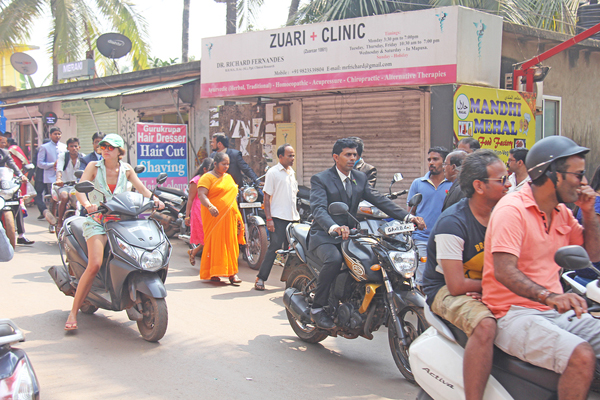
Public Transportation in Goa


Summary: Mastering the public transportation system in Goa is a crucial aspect of adapting to life there. This article provides a detailed overview of the available local transit options.
Goa, a small state on the western coast of India, is known for its beautiful beaches, vibrant nightlife, and rich Portuguese history. While it may not have a subway system like New York City, it does have a variety of public transportation options that make getting around relatively easy. These include buses run by the Kadamba Transport Corporation (KTC), auto rickshaws, taxis, motorcycle taxis, and ferries. There's also the Konkan Railway and the South Western Railway that connect Goa to other parts of India. With these options, an expat living in Goa could comfortably live without a car, relying on public transportation and walking. However, having a car could be more convenient for longer trips or for those living in more remote areas.
Buses
The most common form of public transportation in Goa is the bus. The KTC, a government-run corporation, operates a large fleet of buses that cover almost all parts of the state. Buses are a cheap and efficient way to travel, with fares ranging from 10 to 50 rupees depending on the distance. However, they can get crowded during peak hours and may not always be the most comfortable option. Buses are generally safe, but like any public transportation, it's always a good idea to be aware of your surroundings.
Auto Rickshaws and Taxis
Auto rickshaws and taxis are another popular way to get around in Goa. They're more expensive than buses but offer more convenience and comfort. Auto rickshaws are ideal for short distances, while taxis are better for longer trips. Both can be hailed on the street or booked through mobile apps like Ola and Uber. Fares are usually negotiated upfront, so it's a good idea to ask locals about the usual rates to avoid being overcharged. These modes of transportation are generally safe, but it's always recommended to use licensed vehicles and drivers.
Motorcycle Taxis
Motorcycle taxis, or "pilots" as they're locally known, are a unique form of transportation in Goa. They're essentially motorcycles with yellow number plates that can carry one passenger at a time. Motorcycle taxis are a quick and cheap way to travel, especially in areas with narrow roads or heavy traffic. However, they may not be the safest option, especially for those not used to riding on motorcycles. Always make sure the driver provides a helmet and drives responsibly.
Ferries
Ferries are a fun and scenic way to travel in Goa, especially if you're going to or from the islands. The government-run ferry service operates 24/7 and is free for pedestrians. Vehicles are charged a nominal fee. Ferries are safe and reliable, but the schedules can be unpredictable, so it's best to allow extra time for your journey.
Railways
The Konkan Railway and the South Western Railway connect Goa to major cities in India like Mumbai, Delhi, and Bangalore. Trains are a comfortable and affordable way to travel long distances, with sleeper and air-conditioned classes available. Stations are generally safe, but it's always a good idea to keep an eye on your belongings. Tickets can be booked online or at the station, but it's recommended to book in advance as trains can get fully booked, especially during the holiday season.
In conclusion, while having a car in Goa can be convenient, it's certainly not necessary. With a variety of public transportation options available, getting around is relatively easy and affordable. However, like any place, it's always important to be aware of your surroundings and take necessary precautions to ensure your safety.
About the Author
 Joshua Wood, LPC joined Expat Exchange in 2000 and serves as one of its Co-Presidents. He is also one of the Founders of Digital Nomad Exchange. Prior to Expat Exchange, Joshua worked for NBC Cable (MSNBC and CNBC
Primetime). Joshua has a BA from Syracuse and a Master's in Clinical and Counseling Psychology from Fairleigh Dickinson University. Mr. Wood is also a licensed counselor and psychotherapist.
Joshua Wood, LPC joined Expat Exchange in 2000 and serves as one of its Co-Presidents. He is also one of the Founders of Digital Nomad Exchange. Prior to Expat Exchange, Joshua worked for NBC Cable (MSNBC and CNBC
Primetime). Joshua has a BA from Syracuse and a Master's in Clinical and Counseling Psychology from Fairleigh Dickinson University. Mr. Wood is also a licensed counselor and psychotherapist.
Some of Joshua's articles include Pros and Cons of Living in Portugal, 10 Best Places to Live in Ireland and Pros and Cons of Living in Uruguay. Connect with Joshua on LinkedIn.
Additional Information:
- Fun Classes for Expats Living in Goa
- Public Transportation in Goa
- Best Markets in Goa
- Retire in Goa Guide
- 7 Tips for Living in Goa
- Pros & Cons of Living in Goa
- Cost of Living in Goa
- Healthcare & Health Insurance in India
- Best Places to Live in India
- Real Estate in India
- Pros & Cons of Living in India
- Best Places to Visit in India for Christmas Cheer
- 2026 Guide to Living in India
- Pros and Cons of Living in India 2026
- 2026 Guide to Moving to India