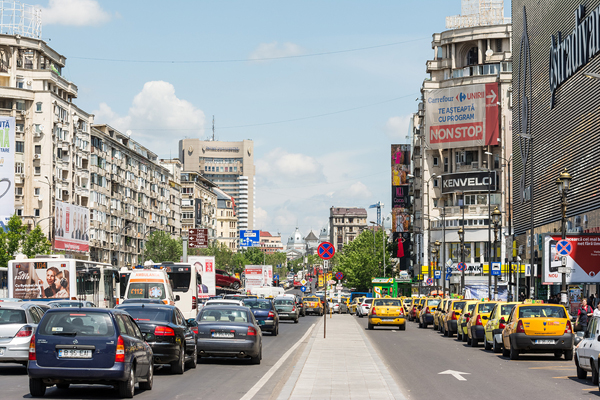
Understanding the Health System in Romania


Summary: Learn about the health system in Romania: how it can and cannot be used by expats, nomads, retirees and others moving to and living in Romania.
Moving to a new country can be an exciting adventure, but it also comes with numerous practical tasks, such as opening a bank account. For expats and digital nomads heading to Romania, understanding the local banking system and what's required to open an account can help smooth the transition. This guide will walk you through the necessary steps and requirements to open a bank account in Romania.
Can foreigners open bank accounts in Romania?
Yes, foreigners can open bank accounts in Romania. Both residents and non-residents are eligible, although the types of accounts and services available may vary. Most banks will require a valid passport and proof of address, along with other documents depending on the specific bank and type of account. Some banks may have stricter requirements for non-residents, so it's essential to check with individual banks for their specific policies.
What are the different types of bank accounts?
Romanian banks offer several types of accounts to cater to various needs. The most common are current accounts (cont curent) for day-to-day transactions, savings accounts (cont de economii) for long-term savings, and deposit accounts (cont de depunere) for fixed-term savings. Some banks also offer accounts tailored to specific needs, such as student accounts or accounts for young professionals. It's wise to compare different account types and their associated fees and benefits before making a decision.
What are the requirements for opening a bank account in Romania?
To open a bank account in Romania, foreigners typically need to provide the following documents: a valid passport, proof of address (such as a utility bill or rental agreement), and a residence permit if applicable. Some banks may also require a personal identification number (CNP) for residents or a tax identification number (CIF) for non-residents. Additionally, banks may ask for initial deposits ranging from a few hundred to a few thousand Romanian lei (RON). Specific requirements can vary between banks, so it's recommended to check with individual institutions beforehand.
Which US bank has branches in Romania?
Currently, there are no US banks with retail branches in Romania. However, some US banks may have correspondent banking relationships with Romanian banks, allowing for services like international money transfers. Expats and digital nomads should check with their US bank for specific services and partnerships with Romanian banks. Alternatively, there are numerous international banks operating in Romania that cater to the needs of foreign clients.
Can I open a bank account in Romania before I move there and how?
Opening a bank account in Romania before moving there can be challenging, as most banks require applicants to be physically present in the country. However, some international banks with branches in Romania may allow non-residents to open accounts from abroad. This process typically involves submitting the required documents to the bank's branch in your home country, which then forwards them to the Romanian branch. It's crucial to contact individual banks for their specific policies and procedures regarding opening an account from abroad.
What are the best banks in Romania for expats?
Several banks in Romania are well-regarded for their services tailored to expats. Some of the best options include: Banca Transilvania, the largest bank in Romania, offering a wide range of services and English-speaking staff; BRD - Groupe Société Générale, a popular choice among expats due to its international presence and comprehensive services; and ING Bank, known for its user-friendly online banking platform and competitive fees. Other notable banks include Raiffeisen Bank and Banca Comercial? Român? (BCR). Researching and comparing services, fees, and English-language support can help expats find the best bank for their needs.
What are the steps involved for a foreigner opening a bank account in Romania?
To open a bank account in Romania, foreigners should follow these steps: 1. Choose a bank that suits your needs and gather the required documents (passport, proof of address, residence permit if applicable, and any other bank-specific documents). 2. Visit the bank branch in person, as most banks require applicants to be physically present. 3. Present the required documents to the bank representative and fill out the application forms. 4. Make the initial deposit if required. 5. Wait for the bank to process the application and issue the bank card and account details. The entire process can take a few days to a few weeks, depending on the bank.
Insider Tips from Expats in Romania: How to Navigate the Health System
"In Romania, healthcare services are provided by both public and private institutions. The public healthcare system is funded by the government and is available to all Romanian citizens and foreign residents. The quality of public healthcare in Romania is generally good, with a wide range of services available, including primary care, specialist care, hospital care, and emergency services. Foreign residents are able to access the public healthcare system, although they may need to pay a fee for some services. Expats in Romania can use the public healthcare system, but they may need to pay a fee for some services. Expats may also choose to use private healthcare services, which are generally more expensive but may offer a higher quality of care," commented one member living in Romania.
"Emergency services in Romania are generally reliable and efficient. In the event of an emergency, the best way to call for an ambulance is to dial 112, the national emergency number. This number is free of charge and can be dialed from any phone, including mobile phones. The operator will then connect you to the nearest ambulance service," commented one member living in Romania.
About the Author
 Joshua Wood, LPC joined Expat Exchange in 2000 and serves as one of its Co-Presidents. He is also one of the Founders of Digital Nomad Exchange. Prior to Expat Exchange, Joshua worked for NBC Cable (MSNBC and CNBC
Primetime). Joshua has a BA from Syracuse and a Master's in Clinical and Counseling Psychology from Fairleigh Dickinson University. Mr. Wood is also a licensed counselor and psychotherapist.
Joshua Wood, LPC joined Expat Exchange in 2000 and serves as one of its Co-Presidents. He is also one of the Founders of Digital Nomad Exchange. Prior to Expat Exchange, Joshua worked for NBC Cable (MSNBC and CNBC
Primetime). Joshua has a BA from Syracuse and a Master's in Clinical and Counseling Psychology from Fairleigh Dickinson University. Mr. Wood is also a licensed counselor and psychotherapist.
Some of Joshua's articles include Pros and Cons of Living in Portugal, 10 Best Places to Live in Ireland and Pros and Cons of Living in Uruguay. Connect with Joshua on LinkedIn.
Additional Information:
- Romania Guide
- Healthcare & Health Insurance in Romania
- Members Talk about Healthcare & Health Insurance in Romania
- Best Places to Live in Romania
- Real Estate in Romania
- Guide to Real Estate in Romania
- Pros & Cons of Living in Romania
- Cost of Living in Romania
- Pros and Cons of Living in Romania
- How to Rent a Home in Romania
- How to Enroll in the Public Healthcare System in Romania
- 10 Best Places for Families to Live in Romania
- 2026 Guide to Living in Romania
- Pros and Cons of Living in Romania 2026
- 2026 Guide to Moving to Romania