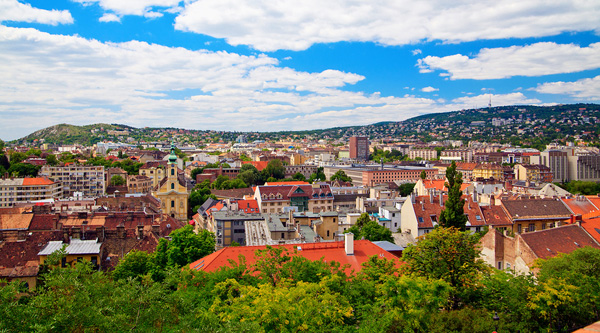
Understanding the Health System in Hungary


Summary: Gain insight into the health care system in Hungary. Explore its accessibility and limitations for expatriates, remote workers, retirees, and others who choose to live in Hungary.
- Determine the type of residence permit you need
- For stays longer than 90 days, you will need a long-term visa or residence permit
- Common types include: student, employment, family reunification, and business
- Prepare the necessary documents
- Valid passport
- Completed application form (available at Office of Immigration and Asylum)
- Passport-size photo
- Document proving the purpose of stay (e.g., work contract, letter of acceptance from university)
- Proof of accommodation (e.g., rental contract, letter from landlord)
- Proof of financial means (e.g., bank statement, scholarship certificate)
- Health insurance certificate
- Apply for a residence permit
- Submit your application at the Hungarian diplomatic mission in your home country
- If you are already in Hungary, you can submit your application at the Immigration Office in person
- Wait for the decision
- Processing time can take up to 70 days
- You may be required to attend an interview
- Register your address in Hungary
- Within 3 days of arrival, register your address at the Immigration Office
- Apply for a Tax Number
- Visit the National Tax and Customs Administration (NAV) website for the application form
- Submit the completed form to the nearest NAV office
- Register with the Hungarian health insurance Fund (TAJ)
- Visit the NEAK website for more information
- Submit the required documents (e.g., residence permit, address registration, passport) at the nearest NEAK office
- Renew your residence permit (if necessary)
- Residence permits are usually issued for a specific duration
- Submit your renewal application at the Immigration Office before your current permit expires
Useful Links
Office of Immigration and Asylum
National Tax and Customs Administration (NAV)
National Health Insurance Fund Management (NEAK)
Insider Tips from Expats in Hungary: How to Navigate the Health System
"Healthcare services in Hungary are provided by both public and private institutions. The public healthcare system is funded by the government and is available to all citizens and foreign residents. The quality of public healthcare is generally good, with a wide range of services available, including primary care, specialist care, hospital care, and preventive care. Expats in Hungary can use the public healthcare system, but they must first register with the local government office and obtain a health insurance card. This card allows them to access the public healthcare system and receive the same level of care as Hungarian citizens. Expats can also opt to use private healthcare services, which are often more expensive but may offer more comprehensive coverage," commented one member living in Hungary.
"Ask what the capabilities are. Ask for costs up front. If possible don't ask for a "formal bill" as this will increase your out of pocket substantially," mentioned one expat living in Hungary.
"In my case the major medical facility is about 36 to 41 km (Siofok or Kaposvar). Emergency services are slow compared to the US and not so sure about the ambulance medic's qualifications but I tend to think it is less than in the US! Although some ambulances in Hungary actually may have a physician on it but I don't know what the criteria are..," commented one expat living in Fonyod, Hungary.
"Emergency services in Hungary are generally reliable and efficient. In the event of an emergency, the best way to call for an ambulance is to dial 112, the national emergency number. This number is free of charge and can be dialed from any phone, including mobile phones. The operator will ask for the caller's location and the nature of the emergency, and will then dispatch an ambulance to the scene," mentioned one expat living in Hungary.
About the Author
 Joshua Wood, LPC joined Expat Exchange in 2000 and serves as one of its Co-Presidents. He is also one of the Founders of Digital Nomad Exchange. Prior to Expat Exchange, Joshua worked for NBC Cable (MSNBC and CNBC
Primetime). Joshua has a BA from Syracuse and a Master's in Clinical and Counseling Psychology from Fairleigh Dickinson University. Mr. Wood is also a licensed counselor and psychotherapist.
Joshua Wood, LPC joined Expat Exchange in 2000 and serves as one of its Co-Presidents. He is also one of the Founders of Digital Nomad Exchange. Prior to Expat Exchange, Joshua worked for NBC Cable (MSNBC and CNBC
Primetime). Joshua has a BA from Syracuse and a Master's in Clinical and Counseling Psychology from Fairleigh Dickinson University. Mr. Wood is also a licensed counselor and psychotherapist.
Some of Joshua's articles include Pros and Cons of Living in Portugal, 10 Best Places to Live in Ireland and Pros and Cons of Living in Uruguay. Connect with Joshua on LinkedIn.
Additional Information:
- Hungary Guide
- Healthcare & Health Insurance in Hungary
- Members Talk about Healthcare & Health Insurance in Hungary
- Best Places to Live in Hungary
- Real Estate in Hungary
- Guide to Real Estate in Hungary
- Pros & Cons of Living in Hungary
- Cost of Living in Hungary
- Top Hospitals in Hungary by Specialty
- Best Places to See While on a Look-See Trip to Hungary (Plus, Itineraries)
- Moving to Hungary with a Pet
- Understanding Mental Health in Hungary
- Pros and Cons of Living in Hungary 2026
- 2026 Guide to Moving to Hungary
- More Advice about Retiring in Hungary