
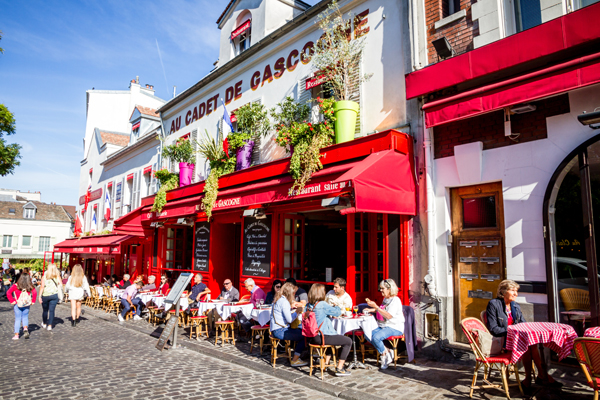
16 Best Places to Live in France (2026 Update)


Summary: People all over the world have dreams of moving to France. Here are 16 of the top destinations to consider... Paris and beyond! This list is updated for 2026 and now includes Biarritz, Grenoble and Rouen.
People all over the world dream of becoming an expat in France. While so many people immediately think of Paris, wine and some of the best museums in the world, the reality is that France has far more to offer than just these iconic cultural attractions. From the sun-drenched villages of Provence to the surf-swept Atlantic coast, and from the Alps to the vineyards of Bordeaux, France offers an extraordinary range of settings for expats and digital nomads seeking a new life abroad.
With sunny beaches, world class ski resorts, charming villages and cities of all sizes, expats and nomads can find anything they are looking for in one of the crown jewels of Western Europe. France consistently ranks among the top destinations for expats thanks to its world-class healthcare system, excellent public transportation, strong international school network, and an unmatched quality of life. Whether you're relocating for work, retiring abroad, or embracing the digital nomad lifestyle, France has a destination that fits your needs and budget.
Our list is a good place to start, but you'll have to get out there yourself and experience all France has to offer to find out what destination will make you the happiest. No amount of online research can replace an actual exploratory trip and doing research on your own to gain the insight needed to find the best place in France for you and your family. Cost of living, proximity to an international airport, the size of the local expat community, and access to English-speaking services are all factors worth weighing carefully before making your decision.
While we've numbered these destinations, they are actually in alphabetical order. It comes down to the setting and size and so many other factors determined by your individual situation and personal preferences.
- Aix-en-Provence
- Angers
- Biarritz
- Bordeaux
- Chamonix
- Dordogne
- Grenoble
- Lyon
- Montpellier
- Narbonne
- Nice
- Paris
- Rennes
- Rouen
- Strasbourg
- Toulouse
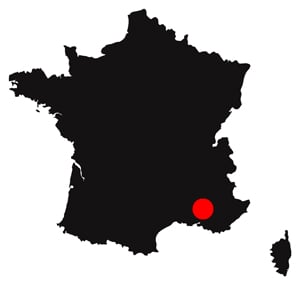
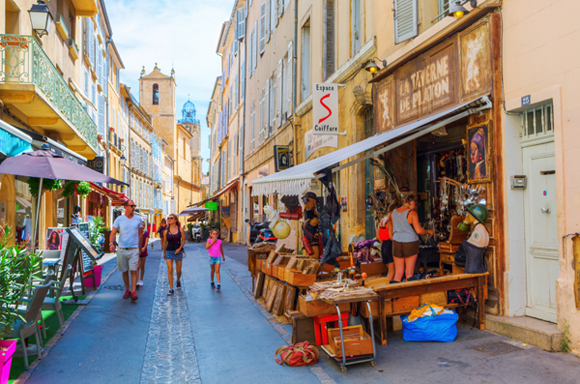
If you have a hard time picking up French, Aix-en-Provence has plenty of English-speakers that might make the transition a little easier. With an average of 300 days of sunshine, only 90 days of rain, and the picturesque setting you've been dreaming of, it will be hard not to wake up with a smile every day! It's bustling enough for young people and families and has plenty of economic activity in the area, but it's still a great place for retirees to settle down and enjoy the French lifestyle and culture.
Aix also offers a manageable size that makes it easy to get around without a car, and the local markets, cafes, and cultural events provide plenty of opportunities to connect with the community. The city is home to several international schools and a university, which draws students and professionals from around the world. For expats concerned about healthcare, Aix has solid medical facilities and Marseille's major hospitals are just a short drive away. Marseille's international airport is also just a short drive away — making travel to and from home convenient. The in Aix-en-Provence is higher than many French cities but still considerably more affordable than Paris, and the quality of life on offer makes it one of the most desirable places to live in France for expats at any stage of life.
Read more about Expats in Aix-en-Provence.
 AGS Worldwide Movers
Get Quote
Relocating abroad soon? Make your move with AGS! AGS Worldwide Movers is a leader in the international moving industry. Our experience and expertise allows us to guarantee our clients the best quality moving services.
AGS Worldwide MoversRelocating abroad soon? Make your move with AGS! AGS Worldwide Movers is a leader in the international moving industry. Our experience and expertise allows us to guarantee our clients the best quality moving services.
Get Quote
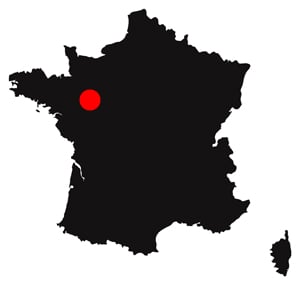
2. AngersRegion: Pays de la LoirePopulation: Approximately 156,000 Climate: Average high temperatures reach the high-70s in summer and the mid-40s in winter Location: Near the confluence of the Loir, Mayenne and Sarthe rivers along the A11 autoroute between Paris and the Atlantic Ocean. |
|
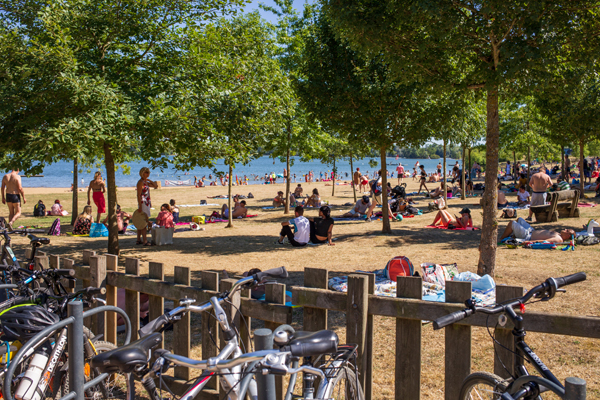
Angers is located at the edge of the Loire Valley, which is a UNESCO world heritage site, and the largest confluence of rivers in France. It has a ton of greenspace and the area around the city is renowned for its horticultural industry. Angers has also developed into a tech hub and enjoys a relatively diversified business environment. Add in several universities and a cost of living that is far lower than Paris, and it is a clear alternative if you are interested in a smaller metropolitan area that is still young and vibrant.
Expats will appreciate Angers' well-connected public transportation system, walkable city center, and the friendly pace of daily life. The presence of international students adds to the city's welcoming feel, and the availability of affordable housing makes settling in a bit less stressful than in larger French cities. Healthcare is well-covered, with the University Hospital of Angers serving the region. A high-speed TGV train puts Paris within 90 minutes, making Angers a realistic option for expats who want a quieter base without being cut off from the capital.
The Chateau d'Angers, which is now a museum, is just one example of the city's impressive architecture and cultural history.
Read more about Angers, France.
 CitizenM
Learn More
It's impossible to confuse citizenM with any other hotel. We don't look or sound like anyone else. Bold, vibrant, and artistic - that's us. Our rooms cater to modern travelers - enormous ultra-comfortable beds, unlimited free Wi-Fi and 24/7 food and drinks always waiting at canteenM. And best of all, our ambassadors are every guest's best friend.
CitizenMIt's impossible to confuse citizenM with any other hotel. We don't look or sound like anyone else. Bold, vibrant, and artistic - that's us. Our rooms cater to modern travelers - enormous ultra-comfortable beds, unlimited free Wi-Fi and 24/7 food and drinks always waiting at canteenM. And best of all, our ambassadors are every guest's best friend.
Learn More
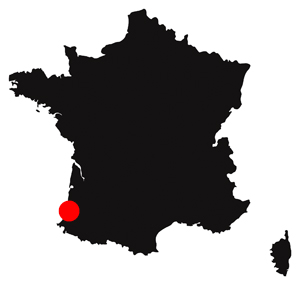
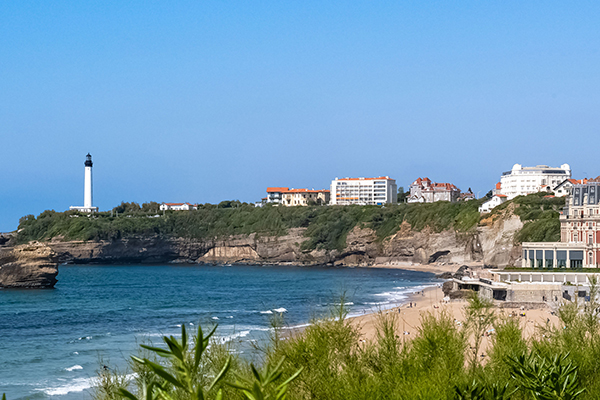
Few places in France combine natural beauty, culture, and lifestyle quite like Biarritz and the surrounding Pays Basque region. Nestled between the Atlantic Ocean and the Pyrenees, this stretch of southwestern France has been attracting expats, surfers, and retirees for decades — and for good reason. The beaches are world-class, the food scene is exceptional (Basque cuisine is in a category of its own), and the pace of life strikes a rare balance between relaxed and vibrant. Biarritz itself is a compact, walkable city with a distinct identity shaped by its Basque heritage, its history as a 19th-century royal resort, and its enduring surf culture.
For expats considering a move to France but wanting something genuinely different from the major cities, the Pays Basque ticks a lot of boxes. The region also includes Bayonne — the area's largest city and commercial hub — and the charming coastal town of Saint-Jean-de-Luz, so there's a range of settings and price points to explore. The cost of living is lower than Paris or the Côte d'Azur, though property prices near the coast have risen in recent years as the area's popularity with remote workers and lifestyle-seekers has grown. Biarritz Airport offers connections throughout Europe, and the TGV connects Bayonne to Paris in around four hours.
The international community here is well-established, with a significant number of British and American expats alongside a growing contingent of digital nomads drawn by the lifestyle. French is the primary language, but the Basque culture adds a fascinating layer that makes the region feel truly unique within France. Whether you're drawn by the waves, the wine, the mountains, or simply the way of life, the Pays Basque is one of the most distinctive and rewarding places to live in France.
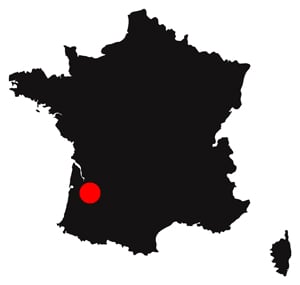
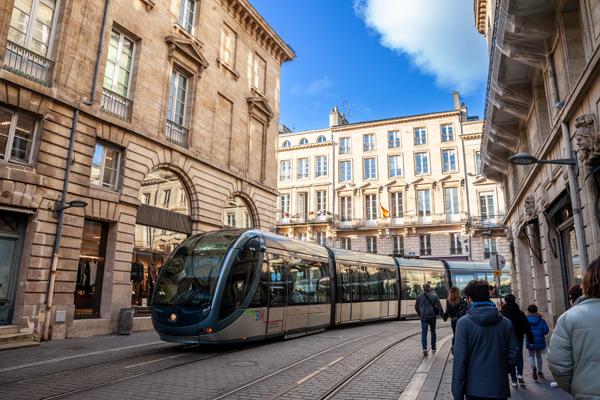
Expats in Bordeaux live in a city far smaller than Paris but a metro area that has more than 1.3 million people. This creates a lot of options for varying preferences and budgets when it comes to both lifestyles and housing. Famous for its wine (duh!), Bordeaux also has a diversified economy with businesses of all sizes and across numerous industries. Bordeaux is the largest ever metropolitan area to ever be named a UNESCO Heritage Site. Founded by the Romans (including the wine!), the blend of old and new makes it a highly desirable city for expats and French citizens alike.
Like most other places on our list, Bordeaux has excellent public transport, including trams, buses, and bike-sharing, making it easy to get around without a car. The city is also home to several international schools and a growing expat community, especially in the suburbs. Healthcare in Bordeaux is excellent, anchored by the CHU de Bordeaux, one of the largest university hospital systems in France. With direct TGV service to Paris in just two hours and a nearby airport offering European and international connections, it's well-positioned for both local living and international travel.
An expat in an Expat Exchange survey said that the "People here are very nice, warm and beautiful, making friends is easy."
Read more about Expats in Bordeaux.
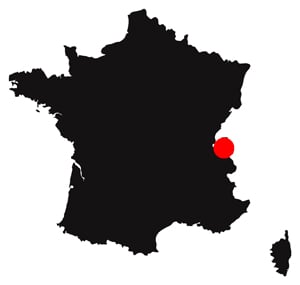
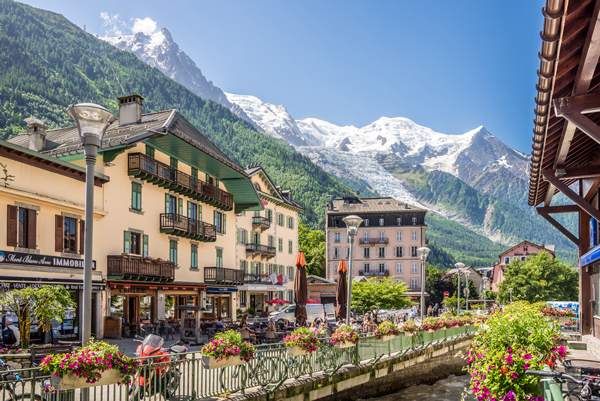
We feel obligated to include a mountain town on our list, so look no further than Chamonix. While many people from other countries who know about Chamonix think of it as being one of the best ski towns in France, the truth is that it is an amazing place year round. Mountain biking, hiking, climbing and more are all at your fingertips. Expats who love the mountains and all of the outdoor activities they afford will find it difficult not to fall in love with Chamonix or one of the nearby towns and villages — the commune of Chamonix-Mont-Blanc includes 16 villages and hamlets. As with mountain life in most places, if you want to get around the area with relative ease you'll probably need a car.
Chamonix has a small but steady international community, thanks to seasonal workers, outdoor enthusiasts, and long-term expats who come for the lifestyle and never leave. The town has a surprisingly international feel given its size, with English widely spoken in many businesses and services. While it's not the cheapest place to live in France — property prices and rental costs reflect the town's global reputation — the quality of life for those who love the outdoors is hard to beat anywhere in Europe. Geneva Airport is just over an hour away, making international travel surprisingly convenient for a mountain town, and the Mont Blanc Express train connects Chamonix to the broader regional rail network.
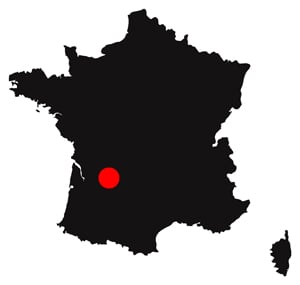
6. DordogneRegion: Nouvelle-AquitainePopulation: Approximately 415,000 Climate: Average high temperatures reach the high-70s in summer and the high-40s in winter Location: On the Dordogne River between the Loire Valley and the Pyrenees. |
|
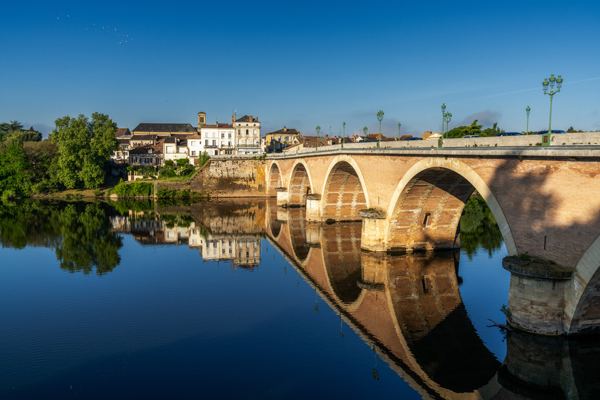
Dordogne has been popular with British expats for decades. So, while it's not exactly a secret, it has a lot to offer those searching for beautiful hilly countryside in the southwestern part of France. With larger towns such as Bergerac and Périgueux to keep you from feeling too isolated, Dordogne also offers plenty of small villages and towns to satisfy anyone looking to escape city life. The region is particularly well-suited to retirees and those working remotely who want to trade urban density for space, scenery, and a slower rhythm of life.
The region's lower cost of living is one of its most attractive features — property prices in rural Dordogne are among the most affordable in France, and day-to-day expenses are modest compared to the cities on this list. The established British expat community means English is spoken more widely here than in many parts of France, which can ease the transition for newcomers. Public transport is limited in rural areas, so a car is essential for getting to local markets, exploring the vineyards, and making the most of the scenic countryside. Bordeaux is within easy driving distance for bigger city amenities, and Bergerac Airport offers direct flights to the UK.

Relocating abroad soon? Make your move with AGS! AGS Worldwide Movers is a leader in the international moving industry. Our experience and expertise allows us to guarantee our clients the best quality moving services.
Relocating abroad soon? Make your move with AGS! AGS Worldwide Movers is a leader in the international moving industry. Our experience and expertise allows us to guarantee our clients the best quality moving services.
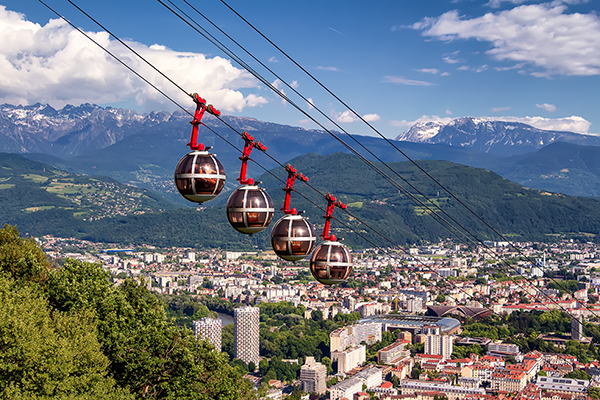
Grenoble offers something genuinely rare on this list: a real city with a strong economy and a thriving international community, surrounded by some of the best mountain terrain in Europe. If Chamonix appeals to you but you want a more urban base, Grenoble is the answer. Three mountain ranges — the Chartreuse, the Vercors, and the Belledonne — frame the city on all sides, putting world-class skiing, hiking, and climbing within easy reach without ever sacrificing urban amenities.
The city has a well-deserved reputation as one of France's leading tech and research hubs. Home to major employers in semiconductors, clean energy, and scientific research — including the European Synchrotron and the Institut Laue-Langevin — Grenoble draws a large international professional and academic community. Several universities and grandes écoles add to the city's youthful, cosmopolitan energy, and English is spoken widely in professional and academic settings. For expats relocating for work in tech, engineering, or research, it's one of the most natural fits in France outside of Paris.
The cost of living is reasonable relative to its quality of life — housing is more affordable than Lyon or Paris, and the city has a solid public transport network including a well-used tram system. Lyon is just over an hour away by train, and Geneva is reachable in about two hours, making Grenoble well-connected despite its relatively compact size. Healthcare is excellent, anchored by the CHU Grenoble Alpes, and international schools serve the substantial expat population. Whether you're drawn by the mountains, the research sector, or simply the prospect of a dynamic city at a manageable scale, Grenoble is one of the most underrated places to live in France for expats.
8. LyonRegion: Auvergne-Rhone-AlpesPopulation: 523,000 Climate: Average high temperatures reach low 80s in summer and the mid 40s in the winter. Location: At the confluence of the Rhone and Saone rivers 243 miles southwest of Paris. |
|
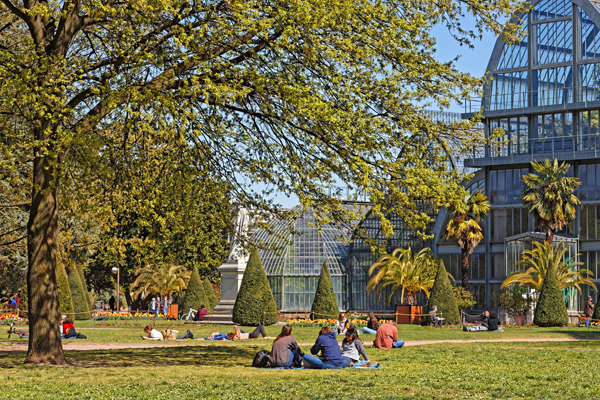
There is no shortage of expats in Lyon who decided it is a better place to live than Paris. It has plenty of job opportunities, it costs a LOT less to live there, and there are plenty of world-class cultural opportunities. Throw in excellent parks and a gastronomy scene that many say surpasses Paris, and you'll understand why Lyon lands on our list of the best places to live in France.
Lyon is well-connected by high-speed rail and has an easy-to-navigate public transit system, making it ideal for both commuters and city explorers. With several international schools, a strong expat network, and a balance of urban energy and livability, it's a solid choice for families, professionals, and anyone seeking a dynamic but manageable city. Healthcare in Lyon is outstanding — the Hospices Civils de Lyon is one of the largest hospital systems in France. The cost of living, while higher than smaller French cities, is significantly lower than Paris across housing, dining, and daily expenses.
Read and participate in our forum thread about Living in Lyon.
9. MontpellierRegion: OccitaniaPopulation: 307,000 Climate: Average high temperatures in the mid 80s in summer and the low 50s in winter Location: Near the Mediterranean Sea (10km / 6.2 miles) in southern France in between Marseille and the border with Spain. |

|

Montpellier is located in the south of France and has a laid-back yet cultured lifestyle. Its large student population (70,000+) and cosmopolitan feel help create a nice balance of old-world yet contemporary charm. The city is walkable, filled with sunny plazas, bustling cafés, and beautiful architecture, which includes its medieval streets and the iconic Place de la Comédie. Its proximity to the coast also makes weekend escapes to the beach both easy and appealing. The traffic in Montpellier can be challenging and many people do what they can to rely on public transportation as much as possible.
For expats, Montpellier offers an excellent quality of life with a lower cost of living compared to Paris or the Côte d'Azur. It has a growing international community, a strong public transport system, and access to quality healthcare and education — the Université de Montpellier has one of the oldest medical schools in the world and the city's healthcare infrastructure reflects that heritage. While French is recommended for integration, many locals are open and friendly, and English is spoken in certain professional and academic circles. Whether you're relocating for work, retirement, or a lifestyle change, Montpellier provides a balanced blend of culture, coast, and community. Another bonus is easy access to Toulouse, Marseille and Lyon and everything in between by train.
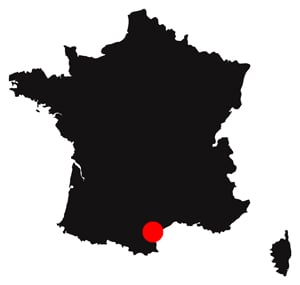
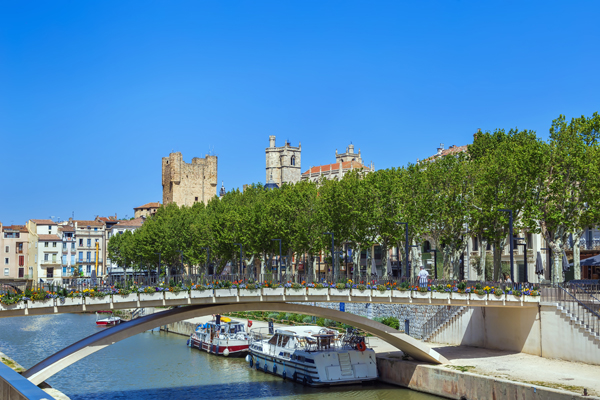
While Montpellier is a little more bustling, Narbonne is a compelling alternative for expats who want Mediterranean southern France without the tourist crowds or the higher price tag of its more famous neighbors. At roughly 56,000 people, it's one of the smaller cities on our list, which means a more intimate feel, easier integration into local life, and a genuine sense of living among the French rather than within an expat bubble.
The practical appeal is real. Property prices in Narbonne are among the most affordable on the Mediterranean coast, making it attractive for retirees and remote workers looking to maximize quality of life on a budget. The historic city center, the Canal du Midi, nearby vineyards, and easy beach access make daily life genuinely enjoyable. For those who want occasional big-city access, Montpellier is 45 minutes away by train and Barcelona is just 2 hours and 15 minutes — a remarkable bonus for a small French city. Healthcare is served by the local hospital with specialist care accessible in Montpellier, and while the international expat scene is smaller than in larger cities, that suits many people just fine.
CitizenMLearn More
It's impossible to confuse citizenM with any other hotel. We don't look or sound like anyone else. Bold, vibrant, and artistic - that's us. Our rooms cater to modern travelers - enormous ultra-comfortable beds, unlimited free Wi-Fi and 24/7 food and drinks always waiting at canteenM. And best of all, our ambassadors are every guest's best friend.
CitizenMIt's impossible to confuse citizenM with any other hotel. We don't look or sound like anyone else. Bold, vibrant, and artistic - that's us. Our rooms cater to modern travelers - enormous ultra-comfortable beds, unlimited free Wi-Fi and 24/7 food and drinks always waiting at canteenM. And best of all, our ambassadors are every guest's best friend.
Learn More
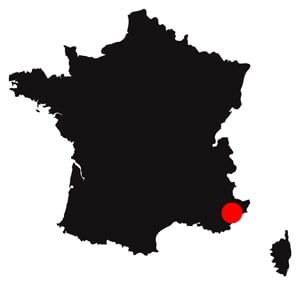
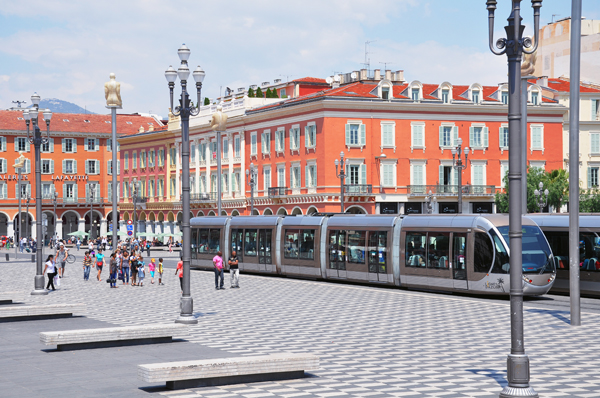
The de facto capital of the French Riviera, Nice is located right next to Monaco and just below the Italian border. Replete with culture and all kinds of activities for anyone that loves being on the water, Nice is the obvious choice for expats who want to live on the Mediterranean coast in France. The city's famous Promenade des Anglais, the colorful Old Town (Vieux-Nice), and the vibrant local markets give it a character and energy that set it apart from anywhere else in the country.
Nice has a strong international presence, with many services available in English and one of the largest expat communities in France. The airport is one of the busiest in the country outside of Paris, offering excellent direct connections to destinations across Europe and beyond — a significant practical advantage for expats who travel frequently. Healthcare is excellent, with the CHU de Nice providing comprehensive specialist services. While housing can be pricey, especially near the coast, a range of neighborhoods and suburbs give expats options at different price points. Those willing to live slightly inland will find costs more manageable while still enjoying easy access to the sea and city life. For expats who want the full French Riviera experience without the extreme exclusivity of Monaco, Nice strikes the right balance.
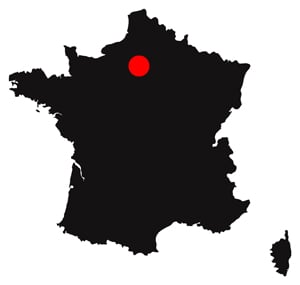
12. ParisRegion: Ile-de-FrancePopulation: Approximately 2.2 million Climate: Temperatures reach high 70s in summer (June - August) and highs in the high 40s in winter (December - February) Location: On the Seine River in the central part of northern France. |
|

Paris has been one of the most popular destinations for world-traveling adventure-seekers for hundreds of years. It is an incredible place for expats. As one of the original international cities, the historic culture and the invigorating vibe of the City of Lights combine to create an allure that many people will find near impossible to pass up. Check out our 10 Tips for Living in Paris to help you get an idea of what it means to move to Paris.
Paris offers nearly everything an expat could want — international schools, job opportunities, an extensive public transport network, and endless cultural experiences. The city is also one of the best-connected in the world for international travel, with two major airports (CDG and Orly) and high-speed rail links to London, Brussels, Amsterdam, and beyond. That said, it's also one of the most expensive cities in France, so planning ahead for housing and daily costs is key. Whether you settle in the heart of the city or one of its many surrounding suburbs, Paris can be as exciting and rewarding as anywhere in the world — it just comes at a price.
Read and participate in our forum thread about Living in Paris.


Rennes, the capital of Brittany in northwestern France, is an increasingly popular choice for expats seeking a modern balance of tradition and livability. Noted for a high quality of life, Rennes offers a relaxed pace, green spaces, and well-preserved medieval architecture alongside a thriving tech and academic scene. The city is home to several universities, giving it a youthful, dynamic atmosphere, and its cultural offerings — from music festivals to local markets — make it feel lively without being overwhelming.
Expats are also drawn to Rennes for its affordability and excellent infrastructure. Housing and daily costs are lower than in Paris, while public transport is efficient and well-connected, including a high-speed TGV train that gets you to Paris in under 90 minutes. The healthcare and education systems are strong, and the welcoming community makes it easier for newcomers to integrate into local life. Rennes is also a gateway to the rest of Brittany — one of France's most distinctive and beautiful regions — with the dramatic Breton coastline within easy reach. Whether you're relocating for work, study, or a slower lifestyle with access to both countryside and coast, Rennes offers a compelling mix of opportunity and charm.
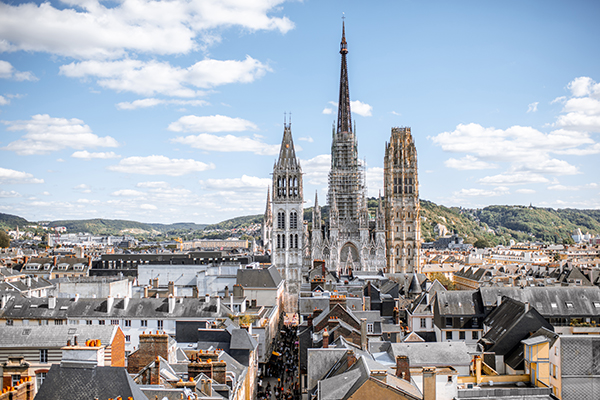
Rouen is one of the most overlooked cities on any best-places-to-live list for France, and that's a big part of its appeal. The capital of Normandy sits on the Seine roughly 75 miles from Paris, making it genuinely commutable to the capital while offering a pace of life — and a cost of living — that Paris simply can't match. The city's medieval old town is stunning, with a skyline of Gothic spires and half-timbered buildings centered on the famous Notre-Dame Cathedral, which inspired Monet's iconic series of paintings. For expats who want to be immersed in authentic French history and culture without the noise and expense of a major city, Rouen makes a compelling case.
The practical picture is strong. Frequent trains connect Rouen to Paris Saint-Lazare in about 70 minutes, making it a realistic base for anyone who needs to work in or travel through the capital. Housing is considerably more affordable than in Paris or the major southern cities, and the broader Normandy region offers easy access to dramatic coastline, apple orchards, and some of the most historically significant landscapes in Europe. For British expats in particular, Normandy has long held a special appeal — the ferry connections from the Channel ports make it feel accessible in a way that the south of France doesn't, and there is an established Anglophone community in the region. Healthcare is served by the CHU de Rouen, and while French is very much the language of daily life here, that can be a genuine advantage for expats who want to integrate deeply rather than stay within an expat bubble.
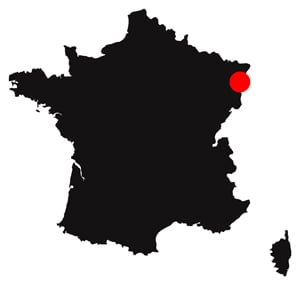
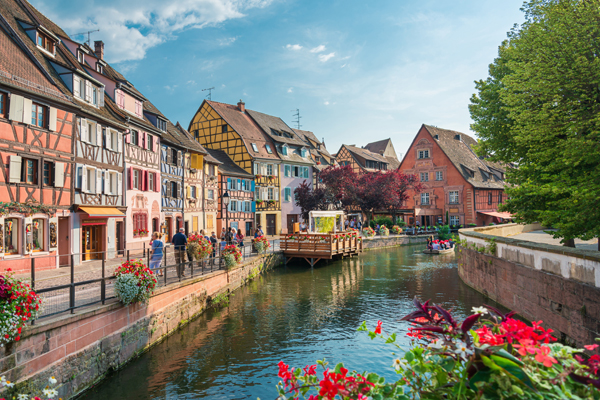
There is a vibrant expatriate community in Strasbourg. The European Parliament is headquartered there and so it offers an international presence and vibe that many will find appealing. It's also bike-friendly, clean, and has the romantic European architecture that people all over the world find enchanting. The University of Strasbourg adds to its energy. If you're looking for a downsized alternative to Paris with genuine international character, this might be the perfect option.
Strasbourg's location on the German border makes it a unique cultural blend, with easy access to both countries for travel or work. The city has excellent public transport, including trams and trains, and a cost of living that's generally lower than Paris. It's especially appealing to expats working in international organizations, EU institutions, or cross-border businesses, as well as those seeking a more relaxed but still cosmopolitan lifestyle. Healthcare is excellent, with the CHU de Strasbourg among the top university hospital systems in France.
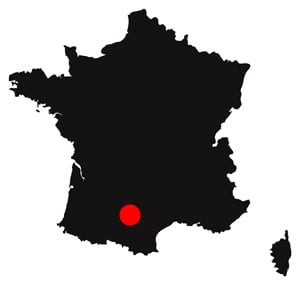
16. ToulouseRegion: OccitaniaPopulation: 493,000 Climate: Average high temperatures in the low 80s in summer and the low 40s in winter Location: On the River Garonne in southern France in between the Atlantic Ocean and the Mediterranean Sea. |
|
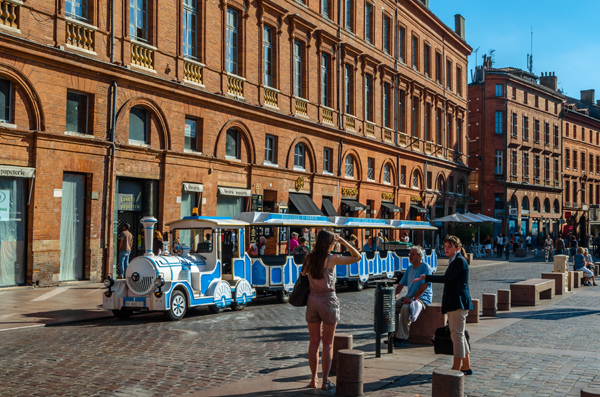
Toulouse has a rich architectural history and an enormous job base powered in part by Airbus, one of the largest aircraft manufacturers in the world. As with other parts of France, the gastronomy scene in Toulouse is not to be underestimated. The cost of living in Toulouse is also much lower than Paris. As with Lyon, there is no shortage of outdoor activities and parks in Toulouse, and the Atlantic Ocean, the Med, and the mountains are all within striking distance.
Toulouse has a strong international community, particularly among engineers, students, and researchers drawn by the aerospace and tech sectors. Its well-developed public transport system, growing innovation economy, and mild climate make it attractive for professionals and families alike. Healthcare is excellent — the CHU de Toulouse is one of the leading university hospitals in southern France. Whether you're coming for the career opportunities, the food, or simply the quality of life, Toulouse is one of the best places to live in France for expats who want a major city without Paris prices.
When asked what people's priorities are in Toulouse, an expat in Toulouse wrote "Work generally, with lots of activities organised by the company you work for. There is plenty to do — restaurants, bars, cinema in the city." As part of an interracial marriage, he said that people were very accepting of he and his wife.
Frequently Asked Questions: Living in France as an Expat
What visa do I need to live in France as an expat?
Most non-EU expats planning to stay in France longer than 90 days will need a long-stay visa (visa de long séjour). Common options include the Talent Passport for skilled professionals and entrepreneurs, the Visitor Visa (visa visiteur) for retirees or those with passive income, and student visas for those enrolled in French institutions. France does not yet have a dedicated digital nomad visa, but the Talent Passport can apply to freelancers and remote workers meeting certain income thresholds. EU citizens enjoy freedom of movement and do not require a visa. Always confirm current requirements with the French consulate in your home country before applying.
What is the cost of living in France compared to the US or UK?
France offers significantly lower costs than major US cities like New York or San Francisco, and is broadly comparable to the UK outside of London. Paris is the most expensive city in France by a wide margin — rental costs in the capital can be two to three times higher than in cities like Rennes, Narbonne, or Dordogne. Southern and western cities generally offer the best value for lifestyle, with Narbonne, Dordogne, Angers, and Rouen consistently among the most affordable options on this list. Grocery costs, dining out, and healthcare are generally lower than in the US.
How good is the healthcare system in France for expats?
France has one of the highest-rated healthcare systems in the world. Expats who are legally working in France gain access to the national health insurance system (Assurance Maladie), which covers a large percentage of medical costs. Retirees and non-working expats typically need to either obtain coverage through the PUMA system after residing in France for a period of time or purchase private international health insurance in the interim. Most major cities on this list have university hospital systems (CHU) offering comprehensive specialist care. English-speaking doctors can be found in most large cities, though learning basic French medical vocabulary is always helpful.
What are the best places in France for retirees?
Retirees tend to gravitate toward destinations with a lower cost of living, good weather, manageable pace of life, and solid healthcare access. Dordogne, Narbonne, and Aix-en-Provence consistently rank among the most popular choices for expat retirees, offering rural charm or Mediterranean lifestyle at a fraction of the cost of Paris or Nice. Biarritz and the Pays Basque have also become increasingly popular with retirees drawn by the Atlantic coastline and Basque culture. For retirees who want urban amenities, Montpellier and Bordeaux offer excellent healthcare, warm climates, and a rich cultural life at a reasonable cost.
What are the best places in France for digital nomads?
France has become an increasingly attractive destination for digital nomads thanks to improving co-working infrastructure, affordable cost of living relative to northern Europe, and exceptional quality of life. Montpellier, Bordeaux, and Toulouse are consistently cited as top picks for remote workers, offering a strong urban ecosystem, good internet infrastructure, and a lifestyle that balances work and play. Rennes is a rising star in the nomad community thanks to its tech scene and Paris connectivity. Biarritz and the Pays Basque have also emerged as lifestyle-driven nomad destinations, particularly popular in the surf and outdoor communities.
Is it easy to learn French while living in France?
Living in France is one of the most effective ways to learn French, particularly in cities where English is less commonly spoken. Immersion accelerates language learning significantly, and most expats report making meaningful progress within six to twelve months of daily life in a French-speaking environment. Cities with larger expat communities — Paris, Nice, Bordeaux — can actually slow language acquisition because it's easier to get by in English. Smaller cities like Narbonne, Angers, and Rouen tend to produce faster language progress for that reason. Alliance Française centers and local language schools operate in most cities on this list.
About the Author
 Joshua Wood, LPC joined Expat Exchange in 2000 and serves as one of its Co-Presidents. He is also one of the Founders of Digital Nomad Exchange. Prior to Expat Exchange, Joshua worked for NBC Cable (MSNBC and CNBC
Primetime). Joshua has a BA from Syracuse and a Master's in Clinical and Counseling Psychology from Fairleigh Dickinson University. Mr. Wood is also a licensed counselor and psychotherapist.
Joshua Wood, LPC joined Expat Exchange in 2000 and serves as one of its Co-Presidents. He is also one of the Founders of Digital Nomad Exchange. Prior to Expat Exchange, Joshua worked for NBC Cable (MSNBC and CNBC
Primetime). Joshua has a BA from Syracuse and a Master's in Clinical and Counseling Psychology from Fairleigh Dickinson University. Mr. Wood is also a licensed counselor and psychotherapist.
Some of Joshua's articles include Pros and Cons of Living in Portugal, 10 Best Places to Live in Ireland and Pros and Cons of Living in Uruguay. Connect with Joshua on LinkedIn.
Additional Information:
- France Guide
- Healthcare & Health Insurance in France
- Members Talk about Healthcare & Health Insurance in France
- Best Places to Live in France
- Real Estate in France
- Guide to Real Estate in France
- Pros & Cons of Living in France
- Cost of Living in France
- Top Hospitals in France by Specialty
- Best Places to See While on a Look-See Trip to France (Plus, Itineraries)
- Moving to France with a Pet
- Understanding Mental Health in France
- Pros and Cons of Living in France 2026
- 2026 Guide to Moving to France