
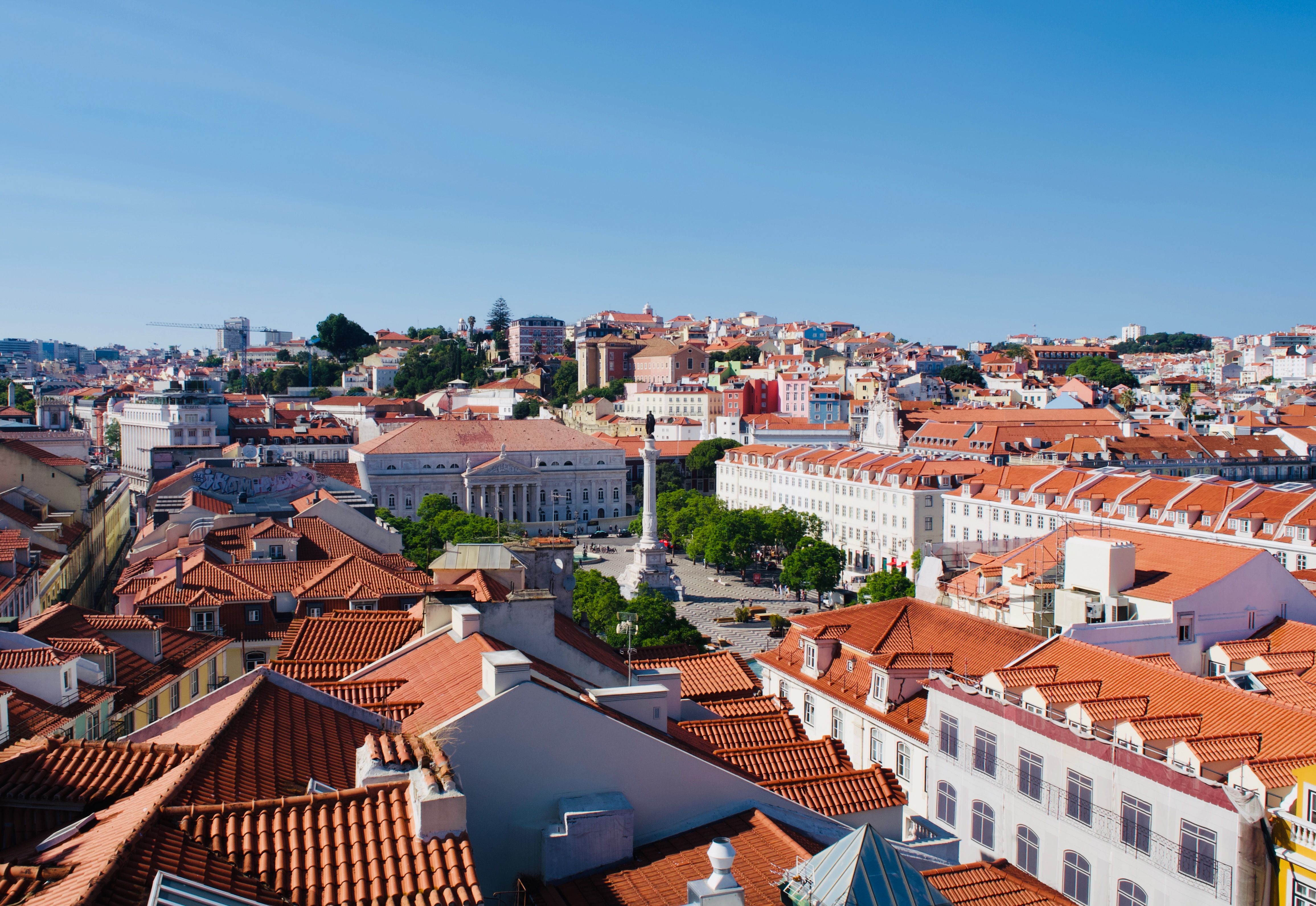
13 Best Neighborhoods in Lisbon - 2026 Update
By Braden Wood and Joshua Wood


Updated for 2026, this guide brings expat-tested recommendations for the 13 best neighborhoods in Lisbon — including Alfama, Chiado, Príncipe Real, Baixa, Graça, Belém, Alcântara, Estrela, and Parque das Nações. Each section covers what makes the neighborhood distinct, from cost and walkability to expat community and cultural character, along with current context on Portugal's D7 Visa, D8 Digital Nomad Visa, and the IFICI tax regime that replaced NHR in 2024. New for 2026: dedicated sections on Alfama and Estrela.
There are plenty of great options for Expats in Lisbon when it comes to finding a great neighborhood. The hardest part is likely to be prioritizing what is most important to you. Some people elect to live near the city center, while others choose the outskirts and rely on public transportation to dip into the action from time-to-time. Other considerations include proximity to work or an international school, walkability, or an up-and-coming neighborhood with lots of buzz. Lisbon has all of these and more!
Portugal has become one of Europe's most accessible relocation destinations for non-EU expats in recent years. The D7 Visa (often called the "Passive Income Visa") allows retirees and remote workers with stable passive income to apply for residency, while the D8 Digital Nomad Visa, launched in October 2022, is designed for remote workers with active foreign-sourced income above a defined monthly threshold. Both pathways lead to permanent residency and eventual citizenship eligibility after five years. Tax-wise, Portugal closed the original Non-Habitual Resident (NHR) regime to new applicants in 2024 and replaced it with the Tax Incentive for Scientific Research and Innovation (often called IFICI or "NHR 2.0"), which offers a flat 20% tax rate on qualifying Portuguese-source professional income for ten years, though eligibility is significantly narrower than the original NHR. For help navigating residency applications, property purchases, and Portuguese tax planning, our partner Lamares, Capela & Associados is a Lisbon-based law firm that assists expats across Portugal with these matters.
Here are the 13 Best Lisbon neighborhoods for expats based upon input from our members living in Lisbon:
- Benfica
- Chiado
- Avenida da Liberdade
- Príncipe Real
- Baixa
- Graça
- Belém
- Alcântara
- Parque das Nações
- Restelo
- Marvila
- Alfama
- Estrela
1. Benfica
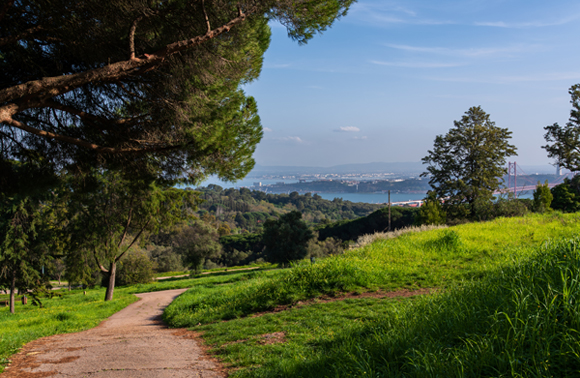
Benfica sits in northwestern Lisbon and is one of the more residential, family-oriented neighborhoods on this list — a place where expats tend to end up if they value living costs and space over proximity to the tourist core. The neighborhood is anchored by Monsanto Forest Park, the largest urban green space in Lisbon (roughly 10 square kilometers), and is well-served by metro, bus, and rail connections that make 20-30 minute access to central Lisbon straightforward. Housing runs meaningfully cheaper than Chiado, Príncipe Real, or Avenida da Liberdade for comparable square footage, and the area attracts substantially fewer tourists. Benfica is also home to S.L. Benfica, the city's most successful football club, whose Estádio da Luz anchors the local identity.
2. Chiado

Chiado is Lisbon's most central and most cosmopolitan neighborhood, anchoring the city's premier shopping, cultural, and dining district. This is the Lisbon of literary cafés (Café A Brasileira, where Fernando Pessoa is famously memorialized in bronze outside), the Chiado Museum of contemporary art, and the Teatro Nacional de São Carlos opera house. Public transportation is excellent — the Baixa-Chiado metro station connects the green and blue lines — and walkability is among the best in the city. The trade-off is cost and crowds: Chiado is one of the more expensive Lisbon neighborhoods to live in, and the main shopping streets are reliably packed with tourists during peak season.
An expat wrote that "Baixa and Chiado are often listed as being flat, but only if you don't need to go shopping. Rent is higher and there are a lot of tourists when tourism is on. Good transit, community feel on the back streets but the main streets feel like a tourist and shopping district."
 AGS Worldwide Movers
Get Quote
Relocating abroad soon? Make your move with AGS! AGS Worldwide Movers is a leader in the international moving industry. Our experience and expertise allows us to guarantee our clients the best quality moving services.
AGS Worldwide MoversRelocating abroad soon? Make your move with AGS! AGS Worldwide Movers is a leader in the international moving industry. Our experience and expertise allows us to guarantee our clients the best quality moving services.
Get Quote
3. Avenida da Liberdade
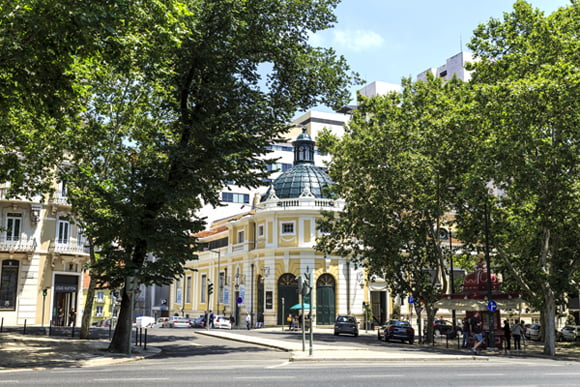
Avenida da Liberdade is Lisbon's grand central boulevard — modeled loosely on the Champs-Élysées — running 1.5 kilometers from Restauradores Square in the south to Marquês de Pombal Square in the north. Strictly speaking, Avenida da Liberdade is more a destination than a residential neighborhood: the boulevard itself is largely lined with luxury retail (Louis Vuitton, Prada, Burberry), five-star hotels, embassies, and a few high-end residential buildings, with most expat housing concentrated in the bordering neighborhoods of Príncipe Real, Chiado, and Baixa. The avenue's wide tree-lined median, monuments, and meticulously maintained gardens make it one of the most pleasant urban walks in southern Europe, and the restaurant, café, and theater density along it is one of the highest in the city.
Príncipe Real, Chiado, and Baixa all border Avenida da Liberdade and are the most practical options for living near it.
 BlueCross BlueShield Global Solutions
Get Quote
BlueCross BlueShield Global Solutions (BCBS) offers global health plans for international assignments or trips lasting 6 months or longer. With access to over 1.7M medical providers in 190 countries around the world, BCBS provides members with solutions and industry-leading digital services - ensuring top-quality coverage to people who live, work, study and travel internationally.
BlueCross BlueShield Global SolutionsBlueCross BlueShield Global Solutions (BCBS) offers global health plans for international assignments or trips lasting 6 months or longer. With access to over 1.7M medical providers in 190 countries around the world, BCBS provides members with solutions and industry-leading digital services - ensuring top-quality coverage to people who live, work, study and travel internationally.
Get Quote
4. Príncipe Real
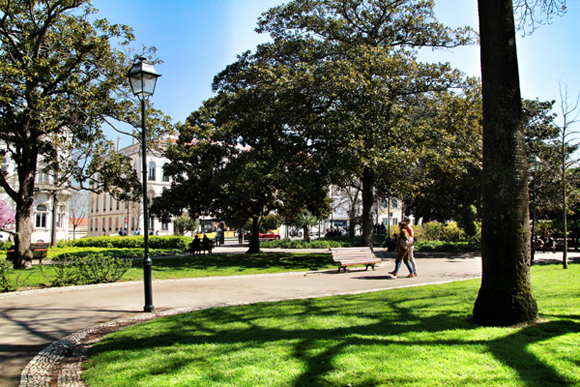
Príncipe Real has emerged over the past decade as one of Lisbon's most fashionable and most-talked-about neighborhoods, particularly among the wave of younger international expats and digital nomads who have arrived since 2020. The neighborhood sits on a hill just above Avenida da Liberdade and is anchored by its namesake garden — the Jardim do Príncipe Real — with its iconic century-old Mexican cypress tree. Portuguese fashion designers, architects, and advertising agencies have concentrated here, alongside quirky concept stores, upscale antique shops, and a notable LGBTQ+ scene. The neighborhood is also home to Embaixada, a converted 19th-century palace housing independent Portuguese boutiques, and to the EmbaiXada-adjacent botanical garden Jardim Botânico. An FT article observed that Portuguese fashion designers, architects, and advertising agencies are based here, alongside quirky boutiques and upmarket antique stores.
BlueCross BlueShield Global Solutions
BlueCross BlueShield Global Solutions (BCBS) offers global health plans for international assignments or trips lasting 6 months or longer. With access to over 1.7M medical providers in 190 countries around the world, BCBS provides members with solutions and industry-leading digital services - ensuring top-quality coverage to people who live, work, study and travel internationally.
BlueCross BlueShield Global Solutions
BlueCross BlueShield Global Solutions (BCBS) offers global health plans for international assignments or trips lasting 6 months or longer. With access to over 1.7M medical providers in 190 countries around the world, BCBS provides members with solutions and industry-leading digital services - ensuring top-quality coverage to people who live, work, study and travel internationally.
5. Baixa
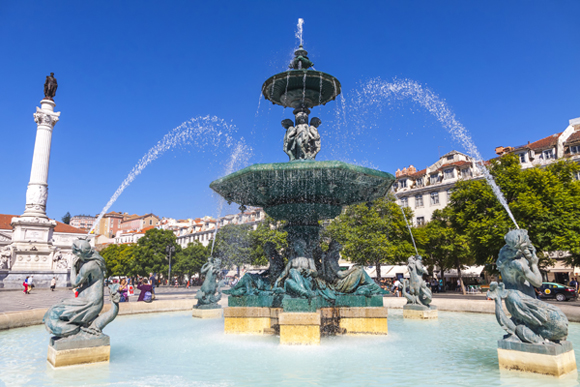
Baixa is Lisbon's downtown core, rebuilt on a strict grid plan after the catastrophic 1755 earthquake — the world's first major example of seismic-resistant urban design. The neighborhood stretches from the riverfront Praça do Comércio (the largest waterfront plaza in Europe) north to the Rossio Square and is one of the few genuinely flat parts of Lisbon, making it unusually walkable in a city defined by hills. Pedestrianized Rua Augusta runs through the heart of the district, anchored by the triumphal Arco da Rua Augusta at the riverfront end. Baixa is more commercial than residential — major banks, government offices, and shops dominate — but a growing share of historic buildings have been converted to apartments and short-term rentals over the past decade.
As noted under Chiado, an expat in Portugal shared that "Baixa and Chiado are often listed as being flat, but only if you don't need to go shopping. Rent is higher and there are a lot of tourists when tourism is on. Good transit, community feel on the back streets but the main streets feel like a tourist and shopping district."
6. Graça
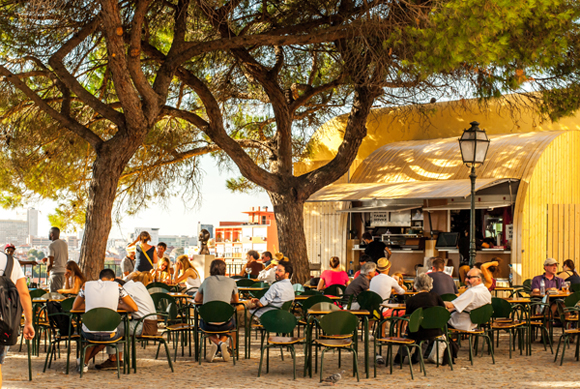
Graça sits on one of Lisbon's seven hills, directly above Alfama, and offers some of the best panoramic views in the city — the Miradouro da Senhora do Monte is the highest viewpoint in central Lisbon and a daily ritual for many residents. The neighborhood retains the cobblestone streets, classic azulejo-tiled facades, and small-village atmosphere that have largely disappeared from more tourist-saturated parts of central Lisbon. Graça is also home to the historic Convento da Graça and the Igreja de São Vicente de Fora, the burial site of the Portuguese royal family. Rents have risen significantly with the area's growing popularity, but Graça remains meaningfully more affordable than Chiado or Príncipe Real and offers a slower, more residential pace within a 15-minute walk of the city center.
7. Belém
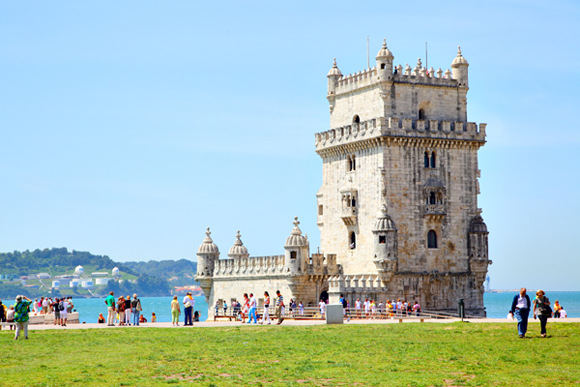
Belém sits along the Tagus River in western Lisbon and is one of the most culturally significant neighborhoods in Portugal — the launching point of the 15th-century Age of Discoveries voyages and home to two UNESCO World Heritage sites: the Jerónimos Monastery and the Belém Tower. The neighborhood has a notably relaxed, residential pace compared to central Lisbon, with extensive riverfront parks, the Berardo modern art collection at the Centro Cultural de Belém, and the Padrão dos Descobrimentos monument all within walking distance. Belém is also the home of the original Pastéis de Belém, where the famous Portuguese custard tart was first created in 1837 and where lines stretch around the block daily. The neighborhood is roughly 15-20 minutes by tram or train from central Lisbon, making it a popular choice for expats who want river views and historical character without urban density.
8. Alcântara
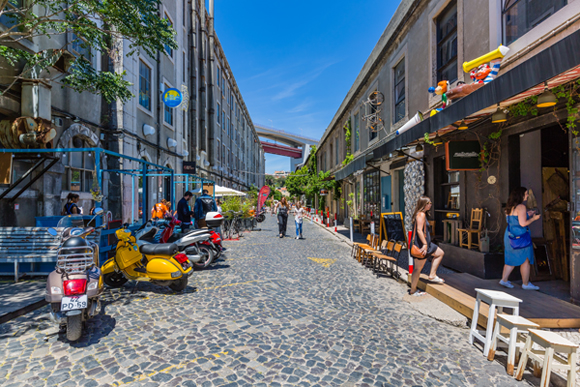
Alcântara sits between Ajuda and Belém to the west and Estrela and Campo de Ourique to the east, and is one of Lisbon's most dramatic recent transformations — from a 19th-century industrial district of textile factories and warehouses into one of the city's most creative and visited cultural neighborhoods. The transformation is anchored by the LX Factory, a converted industrial complex described as "a creative hub fuelled by companies and industry professionals" hosting fashion, advertising, communication, multimedia, art, architecture, and music tenants alongside restaurants, bars, bookstores, and the city's most photogenic Sunday market. The bars and discotheques that began arriving in the early 1990s laid the groundwork, but the LX Factory's opening accelerated Alcântara's reinvention dramatically. Housing remains more affordable than the central neighborhoods, and the area's continued development is one of Lisbon's clearer mid-term appreciation stories.
9. Parque das Nações
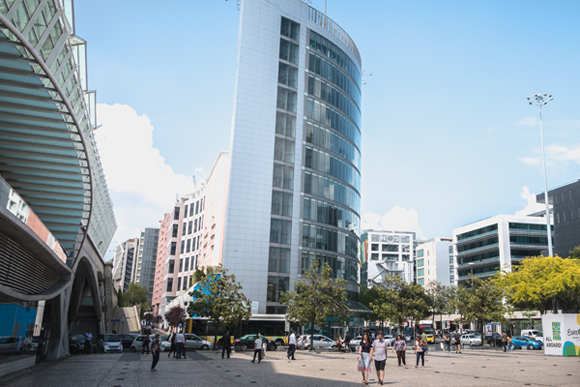
Parque das Nações is Lisbon's most modern neighborhood, built on the former industrial waterfront in eastern Lisbon as the site of the 1998 World Expo and substantially expanded in the decades since. The neighborhood is unique among Lisbon options for being genuinely planned: wide pedestrian promenades, contemporary high-rise residential buildings, the riverside Passeio Ribeirinho park, the Oceanário de Lisboa (one of Europe's largest aquariums), and the Vasco da Gama shopping center. Parque das Nações is the closest expat neighborhood to Lisbon Humberto Delgado Airport — roughly 10 minutes by car or direct metro line — which makes it a particularly practical pick for expats with frequent international travel. The trade-off, as expat residents readily acknowledge, is that the modern, planned character means substantially less of the traditional Lisbon community feel and cultural texture found in older neighborhoods.
An expat on our forum wrote that "Parque das Nações has good transportation but not much community feel. It has easy access to the airport." Another said that "I liked Parque das Nações for its more relaxed and spacious atmosphere, but you might like to be more central."
10. Restelo
Restelo sits in western Lisbon adjacent to Belém and is one of the city's most exclusive residential neighborhoods — a quiet, leafy district with substantial detached homes, mid-century modernist architecture, and a notable embassy presence. The neighborhood appeals to expats prioritizing space, calm, and family-friendly infrastructure over central walkability, and it's particularly popular with diplomatic families and expats with school-age children. Restelo is home to the Estádio do Restelo, the home stadium of football club C.F. Os Belenenses, which also hosts major concerts and events. PaRK International School has a campus in Restelo serving Years 1 through 4, with two other Lisbon campuses at Praça de Espanha (Years 1 to 4) and Alfragide (Years 1 to 12). Public transportation connections are good but the area is car-dependent compared to central Lisbon.
11. Marvila
Marvila is a former industrial district along the river in eastern Lisbon, southwest of Parque das Nações, north of Beato, and east of Alvalade — and is currently one of Lisbon's most actively gentrifying neighborhoods, following an arc similar to Alcântara a decade earlier. Craft breweries (Marvila has emerged as the center of Lisbon's craft beer scene), co-working spaces, contemporary art galleries, and creative-economy tenants have driven the transformation from a once-desolate warehouse district into a destination for younger expats and digital nomads attracted by lower rents and a sense of being early to an up-and-coming area. The neighborhood is still meaningfully rough around the edges in places, but the riverside walking paths, growing restaurant scene, and improving transit access (the planned metro extension will eventually reach the area) have made Marvila one of the more interesting mid-term value plays in Lisbon real estate.
12. Alfama
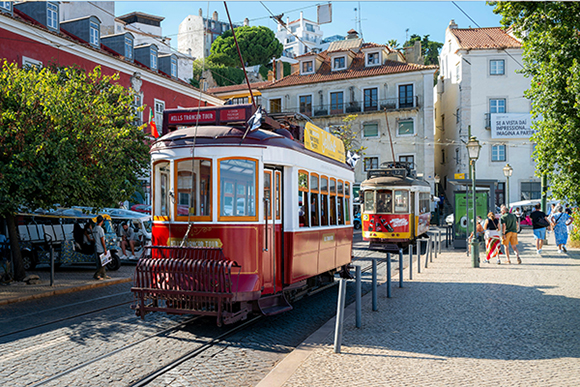
Alfama is the oldest neighborhood in Lisbon — the only major district to survive the 1755 earthquake largely intact — and is the city's most internationally recognized historical quarter, with a tangle of narrow medieval alleys, stone staircases, and tile-fronted houses cascading down the hill from the Castelo de São Jorge to the Tagus River. Alfama is the historical home of fado, Portugal's plaintive traditional music, and a number of the city's most respected fado houses operate here. The neighborhood is also home to Lisbon Cathedral (Sé de Lisboa), founded in 1147, and the Igreja de Santo António. Living in Alfama is a romantic but practical trade-off: rents have risen sharply with tourism, parking is essentially impossible, deliveries can be challenging because of the narrow streets, and tourist foot traffic is heavy. But for expats who want to live in the most genuinely historic part of the city, no other Lisbon neighborhood comes close.
13. Estrela
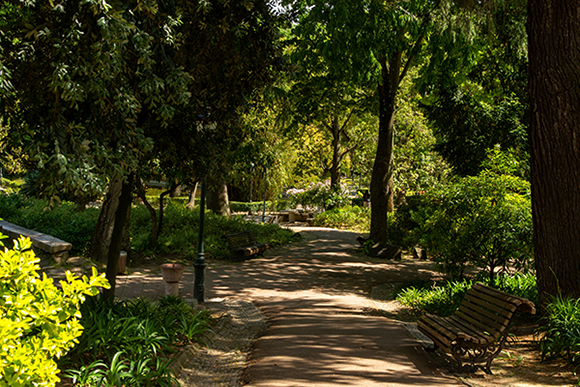
Estrela is one of Lisbon's most consistently popular expat neighborhoods, anchored by the elegant 18th-century Basílica da Estrela and the surrounding Jardim da Estrela — a 4.6-hectare landscaped park that functions as the neighborhood's living room. The district has a strong diplomatic presence (the British Embassy and several other embassies are located here), excellent international school access, and a more residential, slower-paced character than Chiado or Príncipe Real while remaining well within walking distance of central Lisbon. Estrela's appeal to expats centers on the combination of leafy quiet, beautiful architecture, mature tree-lined streets, and easy access to both the city center and the Lapa neighborhood to the south. Rents run higher than Graça or Marvila but generally below Príncipe Real and Chiado for comparable properties. The famous Estrela Tram 28 route runs through the neighborhood and connects directly to Alfama, Baixa, and Graça.
About the Authors
 Braden Wood is a part-time content developer at Expat Exchange . In addition to researching and writing articles for Expat Exchange, he is involved with photo and video content development with a special focus on New York City, where he is a student in the Undergraduate Film & Television program at NYU Tisch School of the Arts.
 Joshua Wood, LPC joined Expat Exchange in 2000 and serves as one of its Co-Presidents. He is also one of the Founders of Digital Nomad Exchange. Prior to Expat Exchange, Joshua worked for NBC Cable (MSNBC and CNBC
Primetime). Joshua has a BA from Syracuse and a Master's in Clinical and Counseling Psychology from Fairleigh Dickinson University. Mr. Wood is also a licensed counselor and psychotherapist.
Joshua Wood, LPC joined Expat Exchange in 2000 and serves as one of its Co-Presidents. He is also one of the Founders of Digital Nomad Exchange. Prior to Expat Exchange, Joshua worked for NBC Cable (MSNBC and CNBC
Primetime). Joshua has a BA from Syracuse and a Master's in Clinical and Counseling Psychology from Fairleigh Dickinson University. Mr. Wood is also a licensed counselor and psychotherapist.
Some of Joshua's articles include Pros and Cons of Living in Portugal, 10 Best Places to Live in Ireland and Pros and Cons of Living in Uruguay. Connect with Joshua on LinkedIn.
Additional Information:
- Expat Guide to Lisbon
- Healthcare & Health Insurance in Lisbon
- Pros & Cons of Living in Lisbon
- Tips for Expats Driving in Lisbon
- Cost of Living in Lisbon
- Health Care in Lisbon
- The Essential Guide to Lisbon
- Lisbon, Portugal
- 5 Tips for Living in Lisbon, Portugal
- 13 Best Neighborhoods in Lisbon - 2026 Update
- Healthcare & Health Insurance in Portugal
- Best Places to Live in Portugal
- Real Estate in Portugal
- 7 Things to Know Before You Move to Portugal
- What It's Like Living in Lisbon
- Pros and Cons of Living in Portugal 2026
- 2026 Guide to Moving to Portugal
- More Advice about Retiring in Portugal
Comments
thailande77Bravoo